
Facebook

Twitter (X)

Instagram

Somali Magazine - People's Magazine
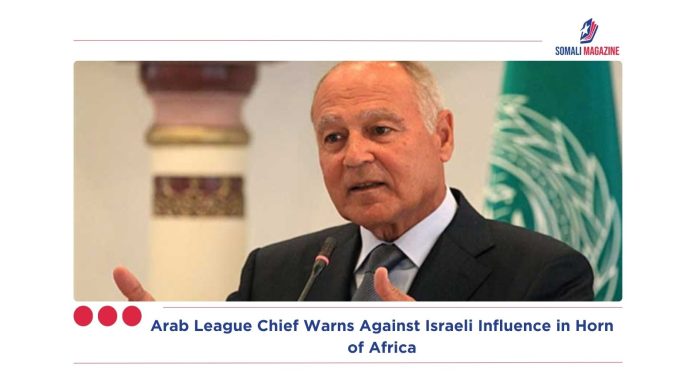
The head of the Arab League has warned against what he described as growing Israeli influence in the Horn of Africa, raising concerns about shifting alliances and regional security dynamics. The Arab League warning Israel Horn of Africa reflects broader geopolitical sensitivities as countries in the region navigate complex diplomatic relationships.
According to statements attributed to Arab League leadership, the concern centers on reports of increasing engagement between Israel and several Horn of Africa entities. Officials indicated that such developments could have implications for regional stability, although specific details of these interactions have not been fully disclosed.
Early reports suggest that Israeli diplomatic and economic outreach in parts of East Africa has expanded in recent years, with analysts pointing to areas such as trade, security cooperation, and infrastructure investment. However, the scope and nature of these engagements vary by country, and not all aspects are publicly confirmed.
The Arab League position Israel has historically been shaped by longstanding political considerations, including the broader Middle East context. Observers note that statements from the organization often reflect both regional concerns and wider geopolitical alignments among member states.
Experts in Horn of Africa geopolitics say that the region has increasingly attracted attention from global and regional powers due to its strategic location along key maritime routes. As a result, diplomatic engagement from external actors—including Middle Eastern countries—has become more visible, though motivations and outcomes differ.
Governments in the Horn of Africa have generally pursued diverse foreign policy strategies, balancing relationships with multiple partners. Analysts caution that external engagement does not necessarily equate to influence or control, and that local political priorities remain central to decision-making.
There has been no immediate detailed response from Israeli officials regarding the warning, and it is unclear how the statement may affect ongoing or future diplomatic interactions. Some observers suggest that such remarks are part of broader diplomatic signaling rather than direct policy action.
At this stage, the Arab League warning Israel Horn of Africa highlights the evolving nature of regional diplomacy, where economic interests, security considerations, and political alignments intersect. Experts emphasize the importance of continued dialogue to manage tensions and ensure that competing interests do not escalate into broader disputes.
As developments unfold, further clarification from official sources is expected to shed light on the extent and implications of these diplomatic engagements.