
Facebook

Twitter (X)

Instagram

Somali Magazine - People's Magazine
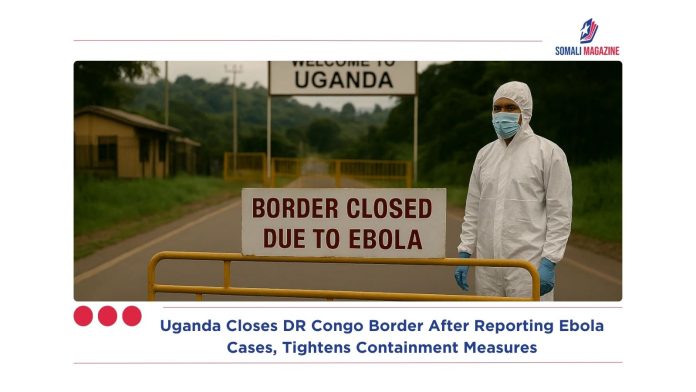
Uganda has announced the temporary closure of parts of its border with the Democratic Republic of Congo following the confirmation of Ebola cases, as authorities move to contain potential spread. The Uganda Ebola border closure reflects heightened concern among health officials about cross-border transmission risks.
According to statements from the Uganda Ministry of Health, at least seven Ebola cases have been recorded, prompting immediate public health interventions. Officials said the decision to restrict movement across key border points is part of broader Uganda disease containment measures aimed at limiting exposure and strengthening surveillance.
Early reports indicate that health teams have been deployed to affected areas to trace contacts and monitor individuals who may have been exposed. Authorities have also increased screening at designated entry points, though details about the exact locations of confirmed cases remain limited.
The Ebola outbreak Uganda DR Congo dynamic has long posed challenges due to frequent population movement between the two countries. Health experts note that cross-border interactions can complicate containment efforts, particularly in regions with limited infrastructure and high mobility.
Officials emphasized that the East Africa health emergency response includes coordination with regional and international partners, including the World Health Organization. Information-sharing and technical support are expected to play a key role in managing the situation.
Analysts caution that early figures and containment strategies may evolve as more data becomes available. While the reported cases have triggered swift action, authorities have not indicated the full scale of the outbreak or whether additional cases are expected.
Public health experts stress that cross-border health response Africa measures must balance disease control with the economic and social impact of restrictions. Border closures can disrupt trade and livelihoods, particularly in communities that rely on daily movement.
The Uganda Ebola border closure underscores the urgency of rapid response in managing infectious disease threats. However, officials have urged the public to remain calm and follow health guidelines, emphasizing that containment efforts are ongoing.
As the situation develops, further updates are expected from Ugandan authorities and international health agencies. The effectiveness of current measures will likely depend on sustained surveillance, public cooperation, and regional coordination.