
Facebook

Twitter (X)

Instagram

Somali Magazine - People's Magazine
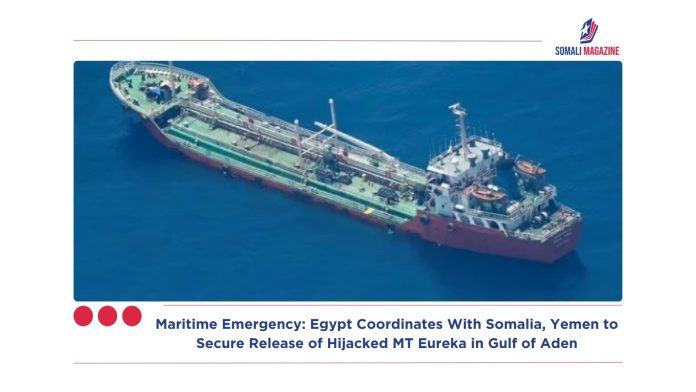
Egypt coordinates with Somalia, Yemen to secure release of hijacked MT Eureka in Gulf of Aden following an official announcement from Cairo, detailing a high-stakes diplomatic intervention to rescue captured national citizens. The transport vessel, a Togo-flagged products tanker managed by UAE-based interests, was overrun by heavily armed gunmen in a highly coordinated pre-dawn ambush. Egyptian Foreign Minister Badr Abdelatty ordered the immediate activation of round-the-clock task forces, instructing regional embassies to initiate direct bilateral engagement with sovereign maritime and intelligence agencies across the Horn of Africa and the Arabian Peninsula. The rapid mobilization aims to ensure the welfare of the detained crew members and establish secure channels for a peaceful resolution before localized legal gridlock or military friction can compromise the delicate humanitarian mission.
The dynamic tactical situation began when masked assailants operating high-speed skiffs intercepted the 88-meter coastal tanker near the strategic Qana oil port off the coast of Yemen’s southern Shabwa Governorate. According to tracking metrics from global naval monitoring agencies, the hijackers disabled the vessel’s automatic identification tracking sensors before forcing the crew to pivot southeast across the Gulf of Aden toward the rugged, autonomous Puntland coastline of northeastern Somalia. Intelligence briefs from local municipal authorities indicate that the armed group initially departed from remote fishing zones near Qandala and Caluula. The aggressive transit effectively moved the vessel out of range of immediate Yemeni coast guard patrol craft, placing it squarely within a complex “gray zone” where cross-border criminal networks and decentralized militias frequently intersect.
-
Diplomatic Channels: The Egyptian Embassy in Mogadishu maintains high-level contact with Somali federal planners to track the vessel’s offshore mooring coordinates.
-
Regional Intelligence: The Egyptian Embassy in Riyadh, which holds formal accreditation to Yemen’s recognized administration, is coordinating with maritime security departments to identify the captors.
-
Family Support: The foreign ministry’s consular sector has initiated regular briefings for the sailors’ relatives, establishing vital communications to assure them of ongoing national security protocols.
The unprecedented maritime standoff has sparked deeper concerns regarding a broader, politically cloaked resurgence of piracy, introducing fresh operational strains onto international migration management and regional trade corridors. While corporate and state planners initially attributed the attack to commercially motivated ransom networks, regional security experts are evaluating potential logistics and intelligence exchanges between Somali armed syndicates and Yemen’s Houthi movement. This alarming escalation in maritime insecurity threatens to derail shared regional infrastructure development and halt crucial commercial traffic transiting the vital Bab al-Mandab bottleneck. As technical teams from Cairo, Mogadishu, and Aden work in tandem to reinforce strategic cooperation, international peacebuilding initiatives remain heavily focused on stabilizing the porous maritime frontier.