Facebook

Twitter (X)

Instagram

Somali Magazine - People's Magazine
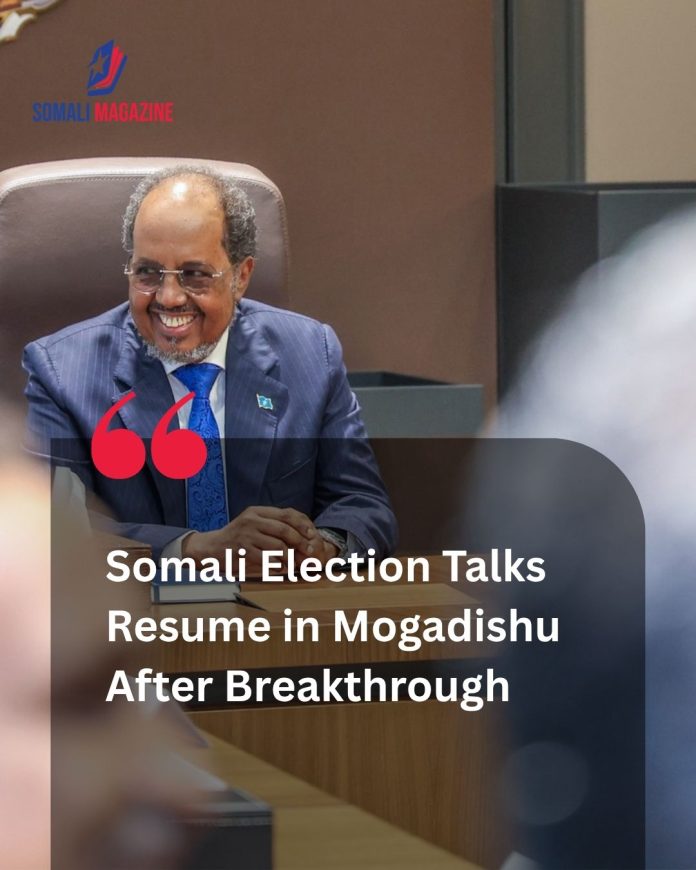
The crucial Somali election talks in Mogadishu have officially resumed after political leaders from the Federal Government of Somalia and regional states agreed on three basic principles to guide the national political roadmap. Convened under the auspices of the National Consultative Council, the high-stakes summit brings together federal leadership alongside representatives from various federal member states to negotiate a sustainable electoral model. Officials participating in the consultations confirmed that the initial breakthrough followed days of intense behind-the-scenes negotiations aimed at overcoming persistent administrative impasses. The consensus on core foundational guidelines is widely viewed by domestic analysts and international observers as a vital step toward safeguarding institutional continuity and preventing political fragmentation across the country.
Central to the newly established consensus are three basic principles designed to anchor future electoral frameworks in mutual accountability, legal compliance, and regional inclusivity. According to official briefings provided by government representatives, the first principle mandates that all future electoral processes strictly adhere to a unified constitutional framework, ensuring that national laws take precedence over localized legislative disputes. The second principle establishes a commitment to inclusive political participation, guaranteeing that all federal member states, opposition platforms, and civil society delegations maintain equitable representation in consultative forums. Finally, the third principle outlines a shared pledge to prioritize peaceful conflict resolution, binding all participating political entities to reject unilateral mandate extensions and resolve disputes exclusively through structured dialogue.
The resumption of consultative discussions comes against the backdrop of complex state-building dynamics and long-standing debates surrounding the transition toward a universal suffrage voting model. For years, federal authorities in Mogadishu have sought to transition the nation from clan-based indirect voting mechanisms toward a direct, one-person-one-vote system. However, implementation challenges, security considerations, and political disagreements among regional leaders have repeatedly complicated timeline commitments. Supporters of the current negotiation framework contend that establishing shared foundational principles offers a realistic compromise, creating a flexible baseline that accommodates both local governance realities and national democratic ambitions. Regional delegates noted that establishing clear procedural boundaries helps reduce political friction and rebuilds trust among competing political factions.
As technical committees prepare to translate these foundational agreements into operational guidelines, international development partners and civil society organizations have welcomed the constructive atmosphere surrounding the capital summit. Emphasizing the importance of sustained momentum, international observers have urged all political stakeholders to remain committed to transparent compromise and timely implementation. Local civic leaders have similarly highlighted the need to ensure that electoral planning incorporates robust safeguards for female representation, youth engagement, and minority community participation. With the initial agreement in place, the National Consultative Council is scheduled to continue working sessions in Mogadishu to finalize specific timelines, security protocols, and legislative steps necessary to execute the agreed electoral model across all administrative regions.