
Facebook

Twitter (X)

Instagram

Somali Magazine - People's Magazine
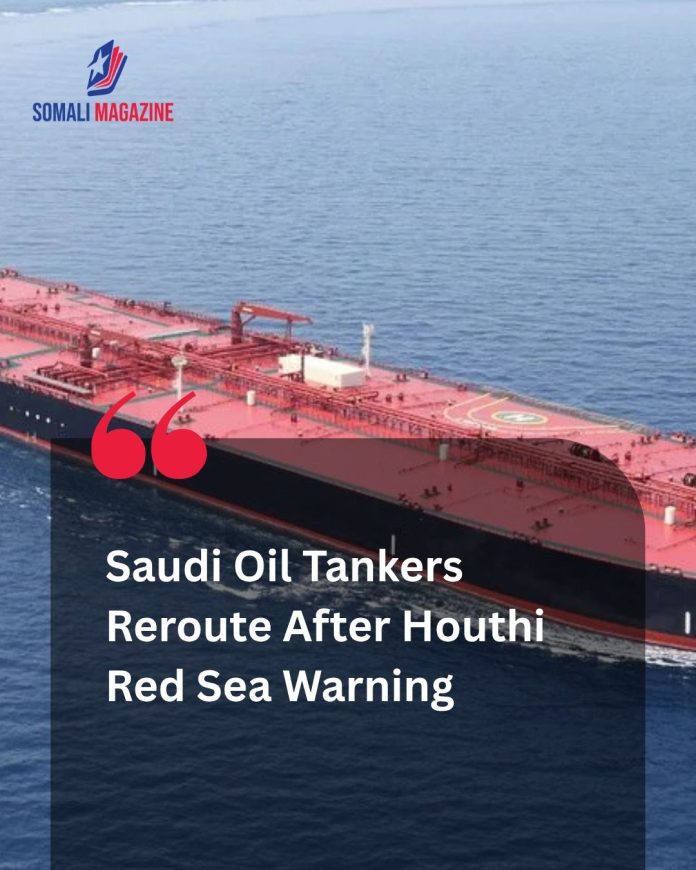
The disruption to international energy transit intensified after news broke that tankers carrying Saudi crude make U-turns in Red Sea waters following direct threats from Yemen’s Houthi movement. Tracking data confirmed that three major oil tankers—the Xin Long Yang, the Rodos, and the Amazon—abruptly changed direction while navigating the southern Red Sea after receiving official warnings from the group’s Sanaa-based command center. The vessels, carrying combined cargoes of millions of barrels of crude destined for buyers in China and India, turned north toward the Suez Canal rather than braving the Bab el-Mandeb Strait off the Yemeni coastline. Maritime analysts highlight that these diversions mark a critical escalation in the broader regional conflict, directly threatening one of the world’s most vital alternative energy corridors.
The sudden route changes followed an official decree issued by Houthi leadership declaring a naval blockade against Saudi Arabian ports. In communications distributed to global shipping operations, the group warned maritime operators against loading or discharging cargo at Saudi facilities, explicitly threatening that any non-compliant vessel would be treated as a military target regardless of its location. The timing of the declaration presents severe economic vulnerabilities for regional energy security. With the Strait of Hormuz experiencing heavy operational disruptions due to wider hostilities involving regional powers, Saudi Arabia had increasingly relied on its western terminal at Yanbu on the Red Sea to deliver crude to international buyers. The threat against Yanbu traffic leaves energy markets facing compound supply bottlenecks across multiple global chokepoints.
Rerouting oil shipments around the southern tip of the Red Sea presents major operational and financial challenges for global supply chains. Tankers forced to travel north through the Suez Canal to reach Asian markets must navigate through the Mediterranean and around the African continent, adding weeks to transit times, significantly elevating fuel costs, and driving up war-risk insurance premiums across the shipping industry. Industry observers note that while full physical blockades require substantial naval resources, persistent kinetic threats are already succeeding in deterring commercial traffic from navigating the Bab el-Mandeb Strait.
International defense authorities and maritime security firms have urged all commercial vessels operating in the region to exercise extreme caution, update risk assessments, and implement enhanced security protocols. While some vessels continue operating near Yanbu under heightened security, the widespread transponder deactivations recorded across commercial fleets signal widespread alarm among global shipowners. As diplomatic efforts struggle to de-escalate tensions across the region, energy analysts warn that prolonged maritime instability in the Red Sea could trigger substantial global oil price volatility and disrupt supply guarantees for key Asian economies.