Facebook

Twitter (X)

Instagram

Somali Magazine - People's Magazine
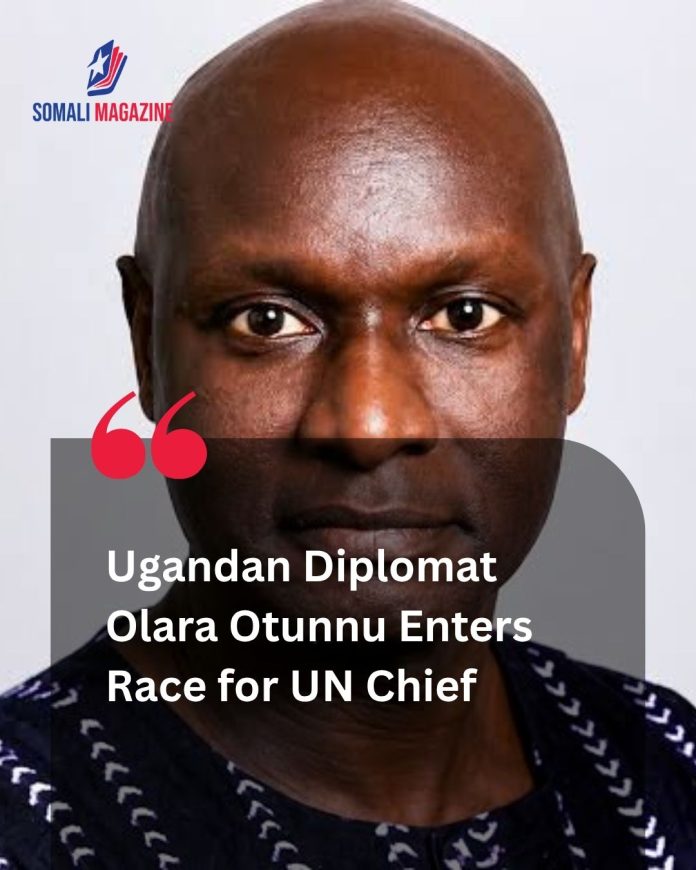
Ugandan diplomat Olara Otunnu enters race to become next UN Secretary-General after Kampala formally submitted his nomination to the leadership of the United Nations Security Council and the General Assembly. The 75-year-old veteran statesman becomes the seventh official candidate stepping forward to replace António Guterres when his second five-year term concludes at the end of December 2026. Otunnu’s candidacy introduces deep institutional experience into the emerging global contest, having previously served as United Nations Under-Secretary-General and Special Representative for Children and Armed Conflict, as well as President of the UN Security Council during his tenure as Uganda’s Permanent Representative.
The formal diplomatic entry expands the geographical and political diversity of candidates competing for the top diplomatic role. In his submitted vision statement, Otunnu emphasized the urgent necessity of institutional reforms across the UN system, pledging to prioritize conflict resolution, establish oversight frameworks for artificial intelligence, and balance climate action with regional economic development. His background carries historic significance within the multilateral organization, as he formulated the straw-balloting procedure—famously referred to as the “Otunnu Formula”—that the Security Council has utilized since 1981 to whittle down candidates during secretarial elections.
Otunnu enters a field that includes high-profile contenders such as former Senegalese President Macky Sall, former Chilean President Michelle Bachelet, IAEA Chief Rafael Grossi, and former Costa Rican Vice President Rebeca Grynspan. Diplomatic observers note that while several member nations favor electing the first female Secretary-General or selecting a leader from Latin America, Africa’s expanded representation could alter regional voting alignments. The UN Security Council is scheduled to initiate informal straw polls in the coming days to gauge member support and narrow down the official ballot.
As discussions intensify in East Africa and across international capitals, diplomats highlight that the next UN chief faces substantial institutional hurdles, including addressable bureaucratic inefficiencies, budget constraints, and escalating geopolitical tensions. Foreign policy analysts maintain that Otunnu’s nomination underscores East Africa’s active pursuit of broader strategic influence within global multilateral institutions. The United Nations General Assembly is expected to conduct the final confirmation vote following the Security Council’s formal recommendation later this year.