
Facebook

Twitter (X)

Instagram

Somali Magazine - People's Magazine
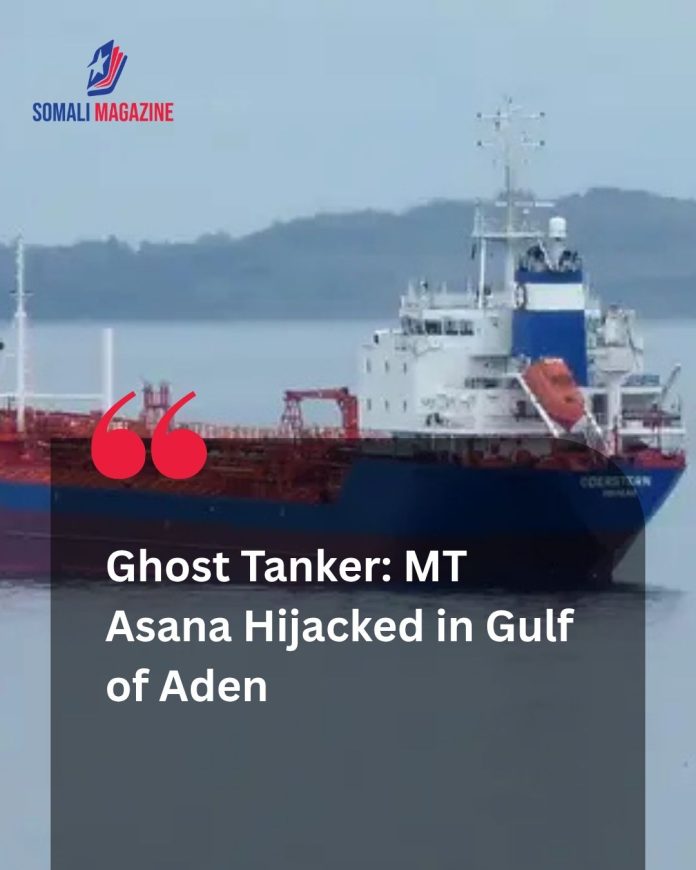
The recent MT Asana hijacking off Somalia has escalated international concern over maritime security in the Horn of Africa, while simultaneously exposing significant inconsistencies regarding the vessel’s cargo declaration, commercial ownership, and intended destination. The Tanzanian-flagged tanker transmitted a distress signal in the Gulf of Aden after armed men boarded the vessel south of Mukalla, Yemen. Maritime security organizations, including the United Kingdom Maritime Trade Operations and private firm Ambrey, confirmed that unauthorized personnel seized control of the unescorted merchant ship. The vessel was subsequently maneuvered into waters off the Puntland coast, where local reports indicate it remains anchored under pirate control. While initial assessments framed the incident as a resurgence of opportunistic regional piracy, subsequent investigations into the vessel’s documentation have raised broader questions among maritime experts.
Chief among the mysteries surrounding the incident is the vessel’s declared cargo and voyage route. Public tracking data and shipping records indicate that the MT Asana loaded crude oil at the port of Karachi, Pakistan, listing a Bosaso crude oil cargo as its official declaration. However, industry analysts note that Somalia possesses no operational oil refineries capable of processing unrefined crude, importing only refined petroleum products such as diesel and gasoline for domestic use. Adding to the complexity, days after the MT Asana hijacking off Somalia took place, no commercial entity, energy firm, or fuel importer in the region has publicly claimed ownership of the shipment. Built in 1992 and operating under a flag of convenience, the aging vessel fits the profile of ships often utilized in opaque regional trading networks.
Regulatory records also reveal that the tanker faced official scrutiny prior to its departure from South Asia. In May, authorities from Pakistan’s Federal Investigation Agency inspected the vessel in Karachi and issued administrative fines after uncovering seaman documentation discrepancies involving foreign crew members. While Pakistani officials did not detain the vessel for criminal activity at the time, the incident highlighted persistent regulatory vulnerabilities surrounding the ship’s operation. Unconfirmed reports have also emerged alleging potential involvement by regional factions and broader smuggling networks in tracking or assisting the vessel’s interception. However, international naval authorities and Puntland security forces have not independently verified these claims, maintaining that investigations remain ongoing.
As the vessel sits at a Puntland coast anchorage near Jiifla, the motivations of the hijackers remain unclear, with no formal ransom demands publicly issued. The incident underscores renewed volatility impacting Gulf of Aden maritime security across vital commercial shipping lanes linking the Red Sea and the Indian Ocean. With international naval missions monitoring the situation, local communities and maritime security agencies continue to watch closely, seeking clarity on the true origin, ownership, and destination of the ghost tanker.