
Facebook

Twitter (X)

Instagram

Somali Magazine - People's Magazine
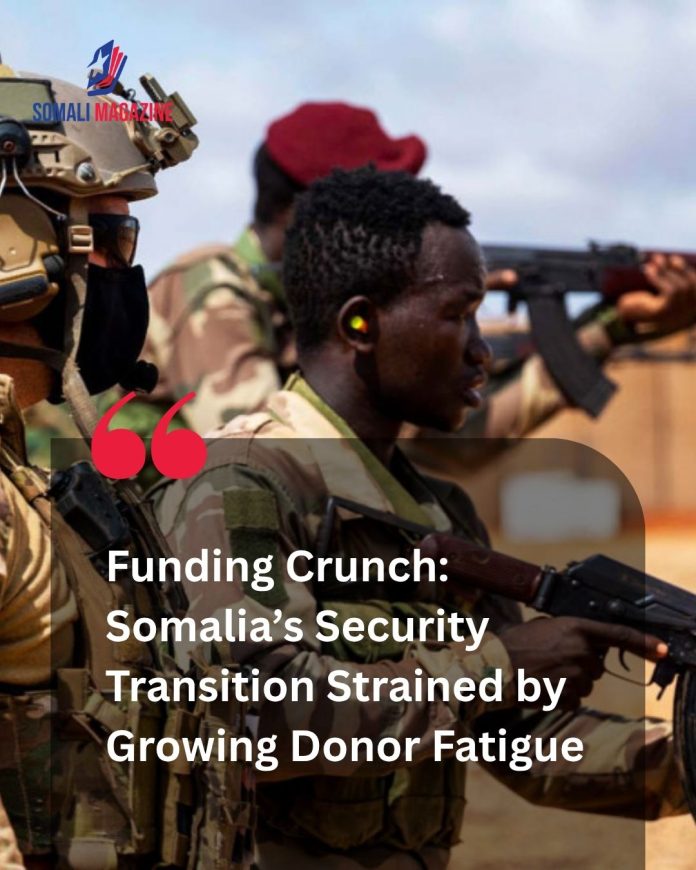
Somalia’s security transition faces challenges as donor fatigue grows, creating a precarious environment for the newly established African Union Support and Stabilization Mission in Somalia (AUSSOM). International partners, including the United States and several European nations, have increasingly signaled a shift in fiscal priorities, resulting in a tightening of purse strings for regional peacekeeping operations. This cooling of financial enthusiasm coincides with a period of persistent political deadlock in Mogadishu and a resurgence of asymmetric threats from Al-Shabaab, leading many observers to conclude that the current stabilization model is reaching a critical inflection point. As funding for essential logistical and troop-support mechanisms wanes, the burden of maintaining territorial gains is shifting rapidly back to the Somali National Army.
The shift is most evident in the mission’s operational budgetary constraints. With the United States recently notifying the United Nations of its intent to curtail funding for AUSSOM’s logistical framework by the end of 2026, the mission is struggling to secure the resources necessary for aviation support, field equipment, and troop stipends. Diplomats suggest that this “donor fatigue” is not merely a result of competing global crises—such as conflicts in Eastern Europe and the Middle East—but a direct response to the lack of tangible political progress within Somalia. Concerns over constitutional disputes, delayed electoral processes, and tensions between the Federal Government and member states have caused international backers to question the long-term viability of an open-ended military presence.
On the ground, these financial headwinds are complicating the strategic objective of transferring security authority to local forces. While the Somali government has accelerated the training of elite infantry units, security analysts warn that a premature withdrawal of AUSSOM forces could leave a dangerous vacuum. Al-Shabaab has demonstrated a resilient capacity to adapt to conventional military pressure, frequently pivoting toward guerrilla tactics to exploit lapses in rural security. Reports indicate that without consistent international surveillance and air support, the Somali state risks losing control over recovered districts, which would jeopardize years of collective investment in state-building and counter-extremism efforts.
To mitigate these risks, regional leaders are currently convening in Kampala to seek alternative, sustainable financing models. The summit highlights the urgent need for a unified Somali political vision that can regain the confidence of the international community. Observers emphasize that military interventions are temporary measures, and lasting peace requires a durable political settlement that includes all federal stakeholders. As Somalia’s security transition faces challenges as donor fatigue grows, the path forward necessitates a delicate balance: Somalia must demonstrate genuine institutional reform to justify continued support, while international partners must ensure that their phased withdrawal does not inadvertently undermine the very stability they have spent decades attempting to build.