
Facebook

Twitter (X)

Instagram

Somali Magazine - People's Magazine
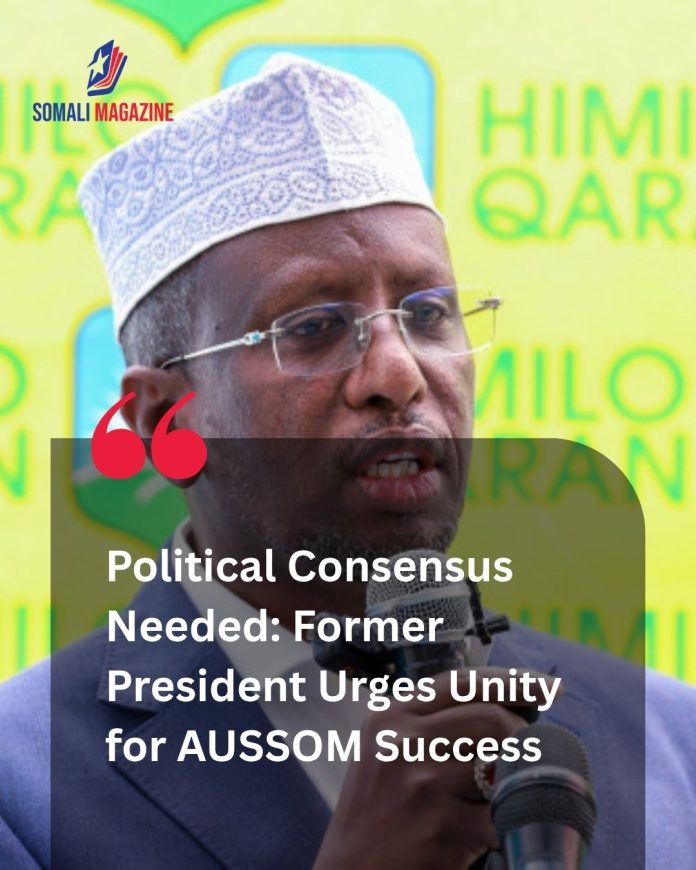
A prominent Former Somali President calls for political unity ahead of AUSSOM transition, cautioning that the nation stands at a perilous institutional crossroads as the African Union Support and Stabilization Mission (AUSSOM) prepares for critical mandate adjustments. In a recent appeal to national stakeholders, the former leader emphasized that without a solidified political consensus, the fragile security gains achieved in the fight against Al-Shabaab risk being compromised by internal power struggles. The call comes as Somalia navigates the complex handover from the previous peacekeeping framework to the new AUSSOM structure, an operational shift that requires stable governance to ensure long-term stability and regional cooperation.
The urgency of this message reflects the deepening divide between the Federal Government of Somalia and opposition leaders, who remain deadlocked over the constitutional amendments passed earlier this year. These legislative changes, which extended presidential and parliamentary terms, have triggered widespread boycotts from several federal member states and fueled concerns regarding the legitimacy of the upcoming electoral cycle. As the country approaches the transition period, observers note that the lack of an agreed-upon framework for governance has weakened the unified front necessary to manage the AUSSOM mission effectively.
In his statement, the former head of state highlighted that AUSSOM—which officially replaced the African Union Transition Mission in Somalia (ATMIS) in 2025—is currently facing significant funding shortages and operational strain. With the mission operating under complex regional geopolitical pressures, including tensions regarding Ethiopia’s role and the integration of new troop-contributing nations like Egypt, the internal Somali discord complicates international support efforts. The former president warned that international partners may recalibrate their commitments if Somali leaders fail to present a cohesive vision for the country’s security transition.
To bridge these divisions, the former leader urged the current administration to initiate inclusive dialogue with the Somali Future Council and leaders of federal member states. He argued that the stabilization of the country should transcend partisan interests, particularly as Al-Shabaab continues to exploit political fragmentation to launch asymmetric attacks across the region. As the African Union prepares for upcoming summits to review the mission’s progress, the appeal for national reconciliation serves as a stark reminder that military support alone cannot replace the foundational necessity of legitimate, collective governance. Ultimately, as a Former Somali President calls for political unity ahead of AUSSOM transition, the stability of the Horn of Africa remains contingent on the ability of Somali leaders to prioritize national cohesion over executive consolidation.