
Facebook

Twitter (X)

Instagram

Somali Magazine - People's Magazine
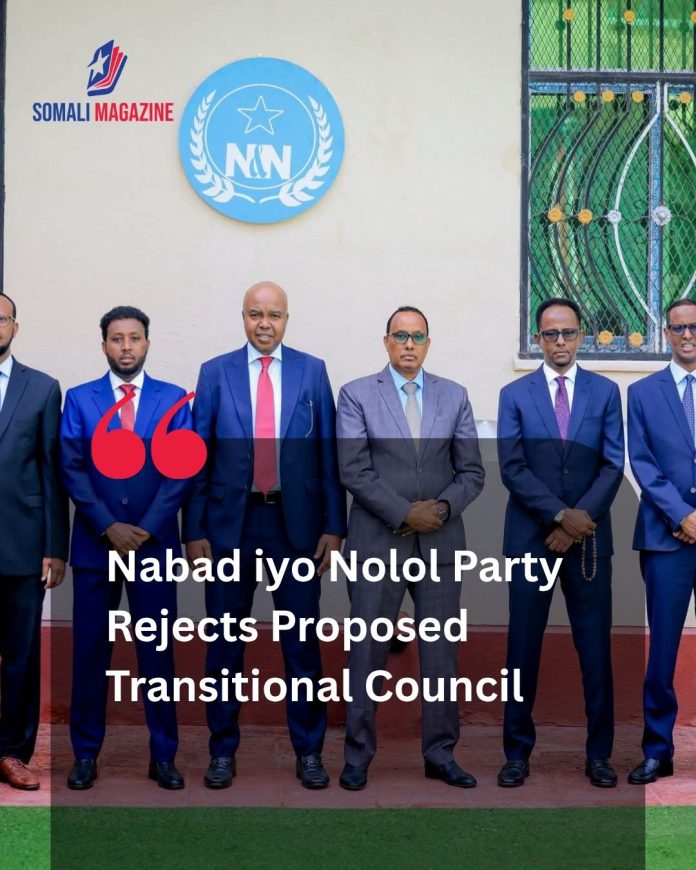
As political debates intensify over governance structures in Mogadishu, the Nabad iyo Nolol political party rejects calls for Somalia’s return to transitional rule, contending that reverting to temporary administrative arrangements would severely jeopardize the democratic progress achieved over the past decade. Former Foreign Minister Mohamed Abdirisaq, a senior leader within the party headed by former President Mohamed Abdullahi Farmajo, publicly criticized the proposal, describing it as a short-sighted measure that lacks long-term vision. Speaking in a recent interview, Abdirisaq emphasized that re-establishing a transitional government would represent a major political setback rather than a viable mechanism for resolving the nation’s ongoing constitutional framework debates.
The party’s stance follows an open letter issued on July 27 by the Somali Future Council, a prominent opposition coalition that includes a former president, former prime ministers, the leaders of Puntland and Jubaland, and several former cabinet ministers. The opposition bloc called for the establishment of an inclusive Transitional Council to oversee state affairs, claiming that the constitutional terms of current national leadership have elapsed without a consensus-based election model in place. The coalition urged international partners and troop-contributing nations to back a political settlement to maintain stability and prevent further institutional fragmentation.
However, leadership within Nabad iyo Nolol maintains that political disagreements must be resolved through direct consultation and institutional dialogue rather than creating new governance structures. Party leaders argued that establishing another transitional body would undo fragile state-building milestones and undermine confidence in permanent democratic institutions. Abdirisaq noted that it remains regrettable for political actors to advocate for temporary governance, particularly after Somalia formally concluded its post-conflict transitional status during previous administrations. Party representatives reiterated that compromising within existing frameworks remains the most viable path toward national stability.
The political friction comes at a crucial juncture when the Nabad iyo Nolol political party rejects calls for Somalia’s return to transitional rule, signaling its commitment to preserving institutional continuity. Observers point out that the debate exposes broader differences over how federal authorities and regional state leaders can reach consensus on direct universal suffrage and electoral reform. While opposition delegates press for shared decision-making bodies to oversee the political transition, key stakeholders argue that bypassing established processes risks worsening political volatility.
Ultimately, as international diplomats and regional bodies monitor the unfolding dialogue, the primary challenge remains balancing immediate political compromises with long-term constitutional integrity. Political analysts emphasize that establishing trust between rival factions is essential to preventing election-related impasses that could hamper security operations against extremist forces. By insisting on dialogue within existing mechanisms, party officials hope to steer the nation away from repeated political resets and toward sustainable state governance.