Facebook

Twitter (X)

Instagram

Somali Magazine - People's Magazine
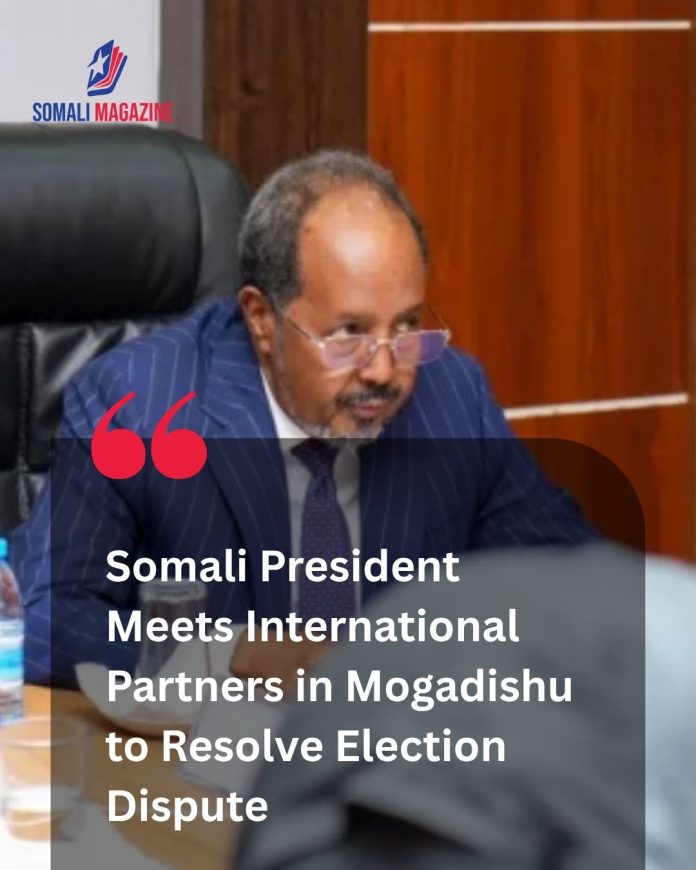
As the Somali president discusses election dispute with international partners during high-level consultative sessions in Mogadishu, political stakeholders across the country are emphasizing the need for broad consensus on national voting frameworks. President Hassan Sheikh Mohamud met with key diplomatic representatives, including envoys from the United Nations, African Union, Intergovernmental Authority on Development, and major donor nations, to review unfolding political tensions regarding planned electoral reforms. Official communications indicate that the discussions centered on resolving procedural disagreements between federal authorities, opposition coalitions, and regional state leaders concerning transition timelines and legislative frameworks governing upcoming national polls.
The ongoing political dialogue follows months of debate over federal proposals to transition Somalia from its long-standing clan-based indirect voting structure toward a direct, universal suffrage system. While federal officials advocate for direct elections to strengthen democratic legitimacy and citizen participation, opposition figures and leadership from key federal member states have expressed serious reservations regarding implementation timelines and constitutional amendments. Opposition coalitions contend that major structural reforms require comprehensive political buy-in from all regional administrations to prevent governance impasses and maintain territorial stability.
During the diplomatic briefings, international envoys reiterated their commitment to supporting Somalia’s state-building objectives while stressing the necessity of inclusive political dialogue. Diplomatic partners urged all participating political factions to exercise restraint, prioritize constitutional integrity, and engage in structured negotiations to prevent administrative gridlock. Representatives highlighted that maintaining institutional continuity is vital for preserving security gains made against insurgent networks, ensuring operational coordination during peacekeeper transitions, and sustaining international development assistance across the Horn of Africa.
To address lingering concerns, federal officials reaffirmed their willingness to engage in consultative discussions with regional authorities and opposition leadership to forge a mutually acceptable path forward. Independent political analysts observe that establishing an electoral model supported by broad consensus is essential for managing national elections smoothly and preserving political stability. Discussions between federal representatives and diplomatic missions are expected to continue in Mogadishu as legal teams and technical committees examine potential mechanisms for electoral compromise.
As the Somali president discusses election dispute with international partners, civic leaders and international observers maintain that collaborative political engagement remains the most effective tool for resolving constitutional standoffs. The federal administration emphasized that dialogue platforms remain open to all political entities seeking to contribute constructively to electoral planning. Ultimately, achieving a balanced consensus between executive authorities, regional states, and opposition groups will be pivotal for bolstering democratic governance, protecting national security, and securing a stable future for the country.