Facebook

Twitter (X)

Instagram

Somali Magazine - People's Magazine
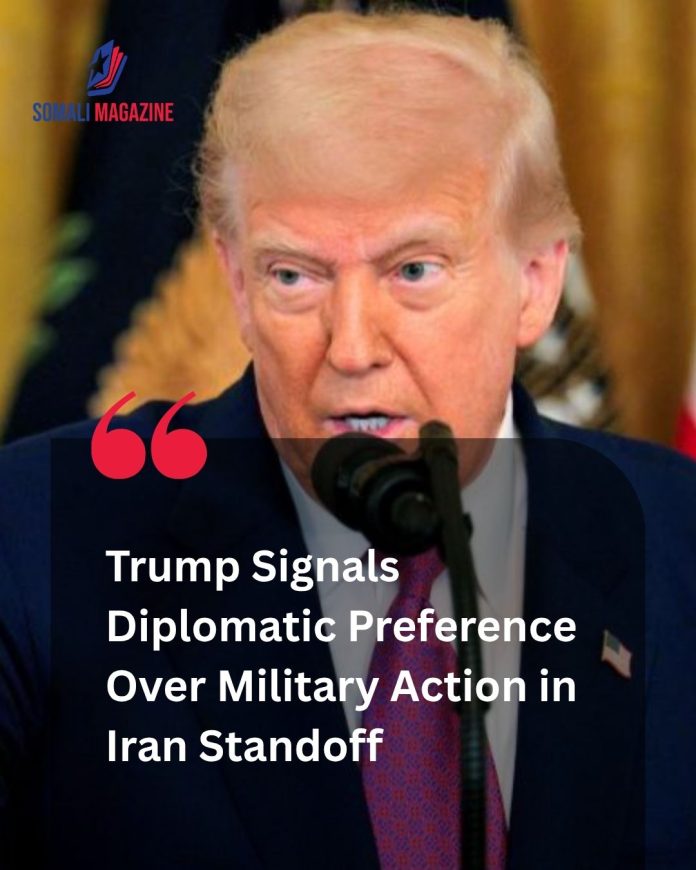
As U.S. President Donald Trump prefers Iran deal over military action, diplomatic negotiations between Washington and Tehran have entered a critical phase following weeks of intense geopolitical friction across the Middle East. Speaking at a public event in Las Vegas on Wednesday, the president publicly outlined his administration’s dual-track approach, emphasizing a clear preference for a negotiated diplomatic settlement while asserting that the option for decisive armed force remains fully on the table. President Trump stated that while high-level operational preparations for major strikes had been positioned, executive authorities paused military measures after Iranian representatives requested direct talks. The announcement underscores a pivotal shift toward dialogue amidst prolonged tensions over regional security and maritime freedom of navigation.
The strategic core of the ongoing negotiations centers on stabilizing international shipping lanes through the Strait of Hormuz, alongside broader non-proliferation parameters governing Iran’s nuclear program. Washington has repeatedly reaffirmed that Tehran will not be permitted to develop nuclear weapons, framing maritime stability and economic security as non-negotiable pillars of any finalized agreement. According to U.S. officials, indirect and direct diplomatic channels involving regional mediators, including Oman, Qatar, Saudi Arabia, and the United Arab Emirates, have facilitated essential framework discussions aimed at preventing further military escalation. Despite previous tactical strikes against regional installations, economic pressure and diplomatic engagement have become the primary mechanisms driving current executive strategy.
Energy markets and global trade observers have closely monitored the diplomatic proceedings, given the profound economic stakes tied to stability in the Persian Gulf. President Trump highlighted that resolving the geopolitical standoff would directly alleviate volatility in global energy sectors, forecasting significant stabilization in crude oil and consumer fuel prices once a comprehensive deal is secured. However, military defense analysts note that while diplomatic engagement has gained momentum, operational assets across the region remain positioned to react should talks stall. Iranian authorities have maintained a cautious stance during regional consultations, acknowledging the broader economic implications of the maritime crisis while disputing specific domestic political characterizations made by external leaders.
For international observers and regional stakeholders across East Africa and the Horn of Africa, the stabilization of vital maritime transit routes remains a critical concern. As U.S. President Donald Trump prefers Iran deal over military action to resolve the impasse, international trade corridors through the Bab al-Mandeb Strait and the Red Sea stand to benefit directly from reduced naval confrontation. Governance experts emphasize that establishing a sustainable diplomatic framework between major powers will be essential to protecting commercial shipping, maintaining global energy stability, and ensuring long-term security across key maritime supply chains.