
Facebook

Twitter (X)

Instagram

Somali Magazine - People's Magazine
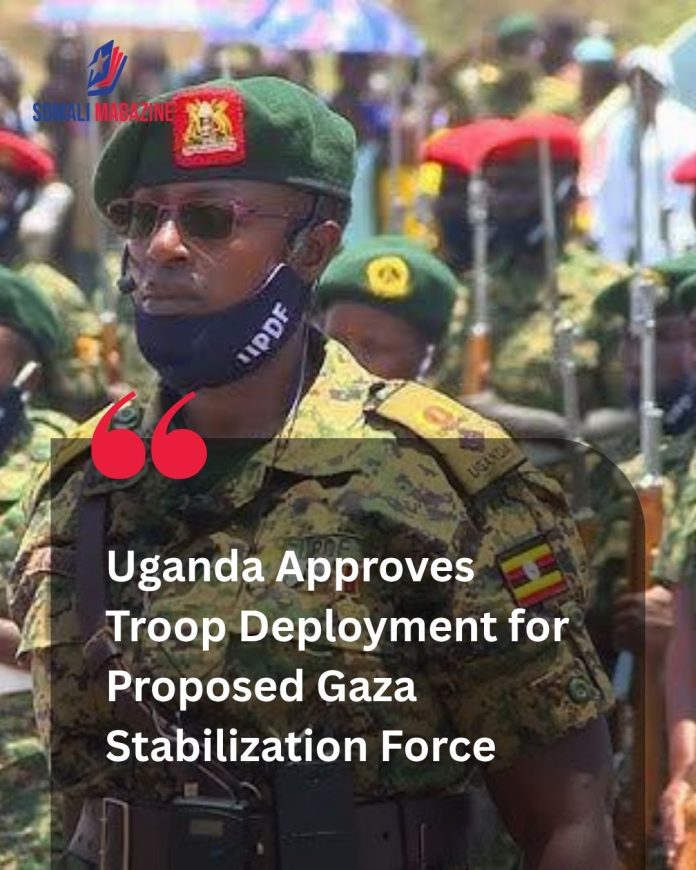
As Uganda approves sending troops for international force in Gaza, the East African nation’s parliament has authorized a potential military deployment that marks a historic expansion of African peacekeeping operations into Middle Eastern security frameworks. The legislative vote in Kampala followed a formal motion introduced by Defense Minister Kiryowa Kiwanuka, confirming that President Yoweri Museveni was directly approached through diplomatic channels to contribute armed forces to the proposed International Stabilization Force. The resolution represents Uganda’s first official public commitment to participating in the multinational security initiative designed to maintain stability, oversee demilitarization protocols, and secure post-conflict corridors following prolonged regional hostilities.
Government officials presenting the measure emphasized Uganda’s extensive operational background in multinational security operations, referencing the nation’s long-standing leadership in stabilization missions across East Africa and the Horn, including extensive experience in Somalia. Defense representatives assured lawmakers that Ugandan defense forces possess the technical readiness, specialized training, and administrative expertise required to operate effectively alongside international partner contingents. The international force, envisioned to comprise up to 20,000 personnel, aims to facilitate humanitarian assistance access, support civilian administrative transitional frameworks, and preserve public order as external forces execute phased operational withdrawals under established international ceasefire agreements.
The decision generated active parliamentary debate, with opposition legislators raising pertinent questions regarding diplomatic alignment, troop mandate definitions, and national interest priorities. Parliamentary critics highlighted potential geopolitical complexities, noting Uganda’s active membership in regional and international multilateral organizations, including the Organization of Islamic Cooperation. Lawmakers raised questions concerning exact operational rules of engagement, funding arrangements, and command structures under the proposed international authority. In response, executive representatives clarified that any eventual troop dispatch remains contingent on formalized operational guidelines, international legal mandates, and finalized multilateral coordination agreements.
Regional defense analysts observe that the parliamentary authorization underscores East Africa’s growing presence in global security architecture and expeditionary peace operations. By offering military assets for international deployment, Uganda joins a select group of non-regional nations willing to support stabilization efforts across the enclave. As executive agencies finalize diplomatic protocols, international observers view the parliamentary backing as a strategic step toward defining the role of African security forces in complex global peacekeeping initiatives.