Facebook

Twitter (X)

Instagram

Somali Magazine - People's Magazine
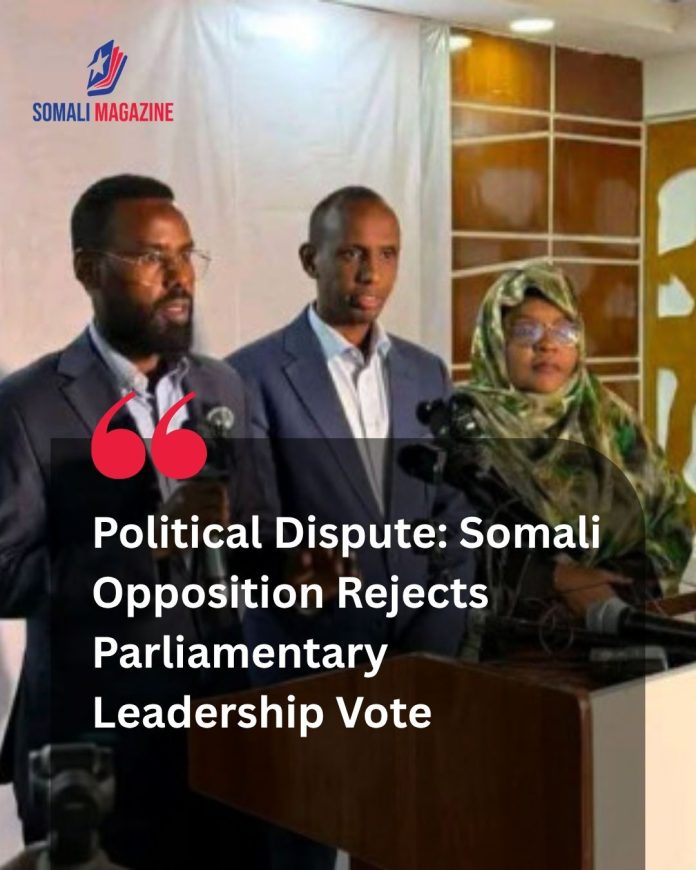
Somalia’s opposition alliance rejects parliamentary leadership election outcomes following fresh disputes over procedural integrity and alleged political manipulation within the nation’s legislative assembly. The coalition, comprising influential political associations and former high-ranking state officials, formally announced its non-recognition of the parliamentary proceedings in Mogadishu. Representatives from the opposition bloc maintain that executive authorities improperly influenced internal voting mechanisms, arguing that federal oversight compromised the independence of the legislative branch. Government spokespersons and parliamentary administration officials have firmly denied these allegations, stating that the leadership election was conducted in strict adherence to constitutional protocols and parliamentary standing orders.
The political friction reflects broader disputes over Mogadishu constitutional governance and national electoral architecture. Tensions between the federal administration and opposition coalitions, including the prominent Somali Salvation Forum, have intensified in recent months over proposed revisions to governance frameworks and electoral transition timelines. Opposition figures assert that recent legislative processes lack genuine multi-party consensus, warning that uncoordinated administrative decisions threaten political inclusivity. Conversely, federal leadership maintains that institutional reform measures are necessary to build robust state mechanisms and support long-term democratic governance across the country.
Regional dynamics have further complicated the dispute, as key federal member states continue to evaluate their alignment with federal legislative decisions. Political analysts observe that persistent disagreements over election integrity in Somalia risk stalling crucial legislative business, including civil security bills, economic reform packages, and state-building initiatives. International partner organizations, including the United Nations and regional diplomatic missions, have consistently called for constructive dialogue among all political stakeholders. Foreign envoys emphasize that maintaining transparent political processes and fostering broad-based consensus remain vital to safeguarding state stability and preserving security achievements.
As Somalia’s opposition alliance rejects parliamentary leadership election results, political observers highlight that structured negotiation channels offer the most practical path toward resolving procedural deadlocks. Leaders from across the political spectrum are being urged by civil society groups and international mediators to prioritize institutional stability and return to formal consultative forums. Whether the federal administration and opposition factions can establish mutually agreeable guidelines for parliamentary oversight will significantly shape the stability of the federal political framework in the coming months.