
Facebook

Twitter (X)

Instagram

Somali Magazine - People's Magazine
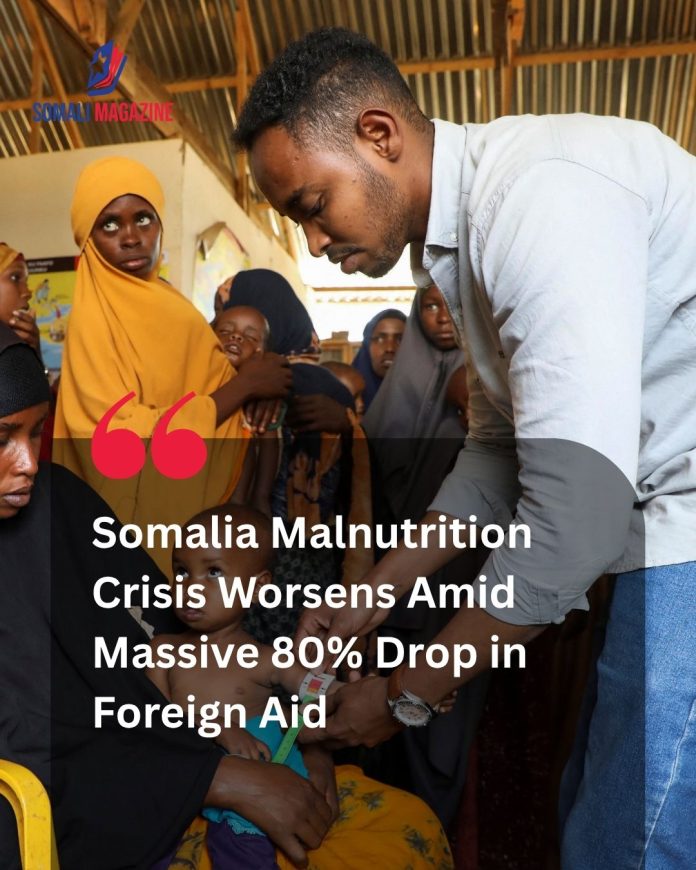
A severe humanitarian crisis is escalating rapidly as the Somalia malnutrition response faces over an 80% drop in funding, leaving frontline medical teams struggling to assist thousands of vulnerable families amidst a alarming surge in child hunger. According to an urgent warning issued by international medical charity Médecins Sans Frontières, acute nutrition intervention programs across critical regions are operating under unprecedented financial constraints. Despite admissions for malnutrition-related complications rising by more than eighty percent compared to last year—reaching twenty-two thousand admissions in 2026—major international donors have drastically curtailed financial contributions. Total available donor support for the East African nation has plummeted to approximately three hundred million dollars, compared to the two point two billion dollars mobilized during the severe drought of 2022.
The sharp pullback in international aid comes as prolonged climatic shocks, repeated failed rainy seasons, and ongoing regional insecurity severely compromise local food security and rural livelihoods. In southwestern hubs like Baidoa, where tens of thousands of displaced families reside in makeshift camps, recent field assessments by medical personnel revealed that one in every four children screened suffers from severe acute malnutrition. Surveys conducted across displacement sites indicate that one-third of households survive on only a single meal per day, while barely two percent can consistently secure three daily meals. Healthcare workers at regional facilities report expanding bed capacity to accommodate gaunt and critically ill pediatric patients, yet severe resource constraints force field teams to navigate harrowing decisions regarding admission and patient care.
Global aid experts emphasize that the funding shortfall reflects broader shifts in Western donor priorities, with key partner nations reducing or eliminating dedicated humanitarian assistance pipelines for the Horn of Africa. Non-governmental organizations and international relief agencies warn that waiting for a formal famine declaration before restoring emergency aid channels will result in preventable loss of life. As community displacement accelerates and environmental stressors persist, humanitarian coordinators urge the global community to re-engage immediately, emphasizing that sustained financing for emergency nutrition and medical infrastructure remains essential to prevent a catastrophic humanitarian decline across vulnerable communities in Somalia.