
Facebook

Twitter (X)

Instagram

Somali Magazine - People's Magazine
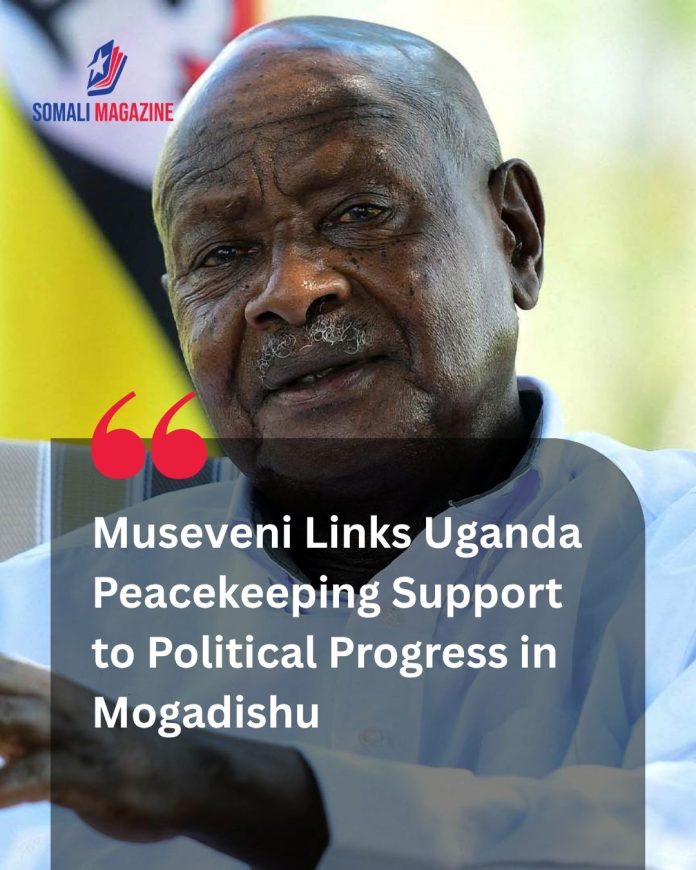
Diplomatic tensions across East Africa surged as Ugandan President Yoweri Museveni link Kampala peacekeeping role to progress in Mogadishu, cautioning that long-term regional military backing depends directly on tangible domestic stability and political consensus within the Somali federal government. Speaking during high-level consultations with troop-contributing nations, the veteran Ugandan leader expressed mounting concern over lingering governance disputes and delayed electoral preparations in the Somali capital. Ugandan officials confirmed that while Kampala remains committed to regional counter-terrorism efforts, continental peacekeepers cannot indefinitely substitute for unified state-building, sound institutional planning, and domestic political consensus among Somalia’s federal and regional leaders.
The stern diplomatic message comes at a crucial transition period for the African Union Support and Stabilisation Mission in Somalia (AUSSOM), which succeeded the long-standing African Union Transition Mission. As the primary troop-contributing country since the initial deployment of peacekeepers in 2007, Uganda has borne heavy military sacrifices to secure Mogadishu and stabilize key southern operational sectors. However, regional security analysts note that growing frustration in Kampala stems from recurring political friction between federal authorities in Mogadishu and Federal Member States, which threatens to derail counter-insurgency operations against Al-Shabaab and complicate the scheduled handover of national security responsibilities to domestic armed forces.
During recent summit proceedings held in Kampala, heads of state from troop-contributing countries confronted compounding operational and financial constraints facing the continental mission. Ugandan defense authorities signaled that sustained military engagement requires clear political benchmarks, inclusive governance frameworks, and reliable international financing mechanisms. President Hassan Sheikh Mohamud’s administration has repeatedly acknowledged the pivotal role played by Ugandan forces, maintaining that federal institutions are actively working to finalize structural constitutional reforms, expand local security capabilities, and harmonize relations with regional member states.
The diplomatic friction highlights broader regional anxiety over the future trajectory of security operations in the Horn of Africa as multilateral mandates evolve. Diplomatic observers emphasize that Museveni’s candid operational assessment reflects widespread donor and partner fatigue over persistent political deadlocks that risk compromising hard-won counter-terrorism gains. As regional leaders seek to streamline African Union security operations, Mogadishu faces intensified pressure to deliver cohesive governance and demonstrate measurable progress toward complete security self-reliance.