
Facebook

Twitter (X)

Instagram

Somali Magazine - People's Magazine
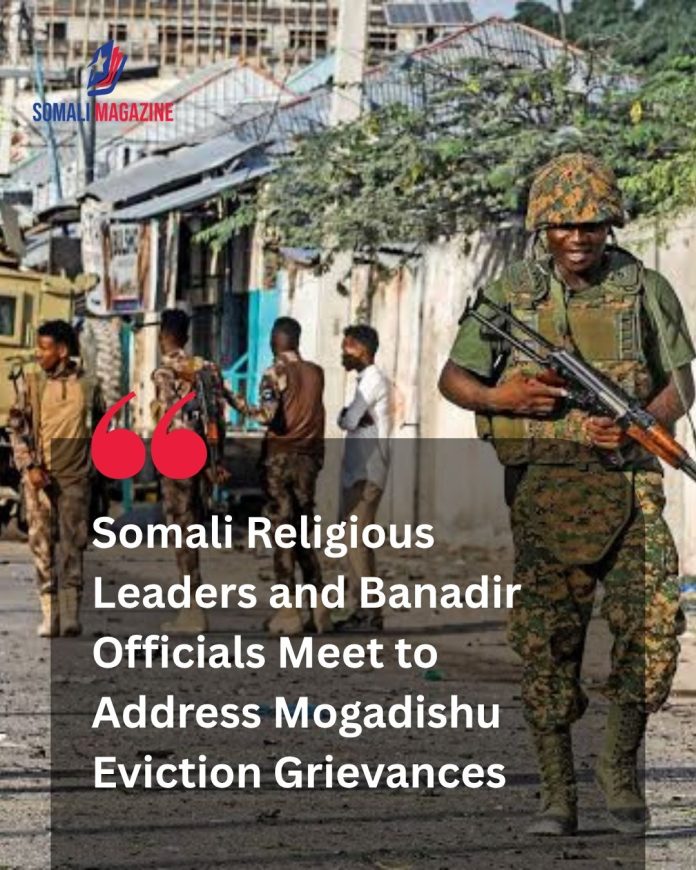
Following days of severe civil unrest across the capital, prominent Somali Ulema and Banadir authorities discuss land grievances after clashes in Mogadishu to resolve mounting disputes surrounding state-led property demolitions. The high-level consultative meeting brought together influential Islamic scholars, senior municipal officials from the Banadir Regional Administration, and community representatives to address public outcry triggered by violent home clearances. Discussions centered on establishing structured dialogue mechanisms, evaluating civilian displacement, and preventing further security escalation between municipal authorities and local residents in affected districts.
The mediation effort follows intense confrontations in the Tookiyo neighbourhood of the Yaqshiid district, where municipal clearance operations encountered armed resistance from residents. Community members accused municipal teams of enforcing overnight demolitions without sufficient legal notice, resulting in gunfire exchanges and nearly ten civilian casualties. Religious leaders stepping into the dispute emphasized that while public infrastructure development remains vital for urban expansion, government initiatives must respect human dignity, Islamic principles of equity, and basic constitutional protections regarding private property rights.
During the consultations, municipal representatives presented the city administration’s operational framework, reiterating that land reclamation remains essential for clearing public thoroughfares and upgrading capital infrastructure. However, scholars urged government leadership to suspend contentious midnight demolition exercises in favor of transparent administrative reviews. The delegation proposed forming a joint committee comprising religious figures, legal experts, and city administrators to audit disputed property deeds, evaluate compensation frameworks for displaced families, and establish fair relocation procedures before further demolition projects commence.
Civic observers and local rights groups welcomed the religious intervention as a critical step toward de-escalating political and social tensions in the capital. While no binding agreement has been formally signed, both municipal leadership and religious scholars pledged to maintain open communication channels to preserve public stability. As the Somali Ulema and Banadir authorities discuss land grievances after clashes in Mogadishu, residents across the capital remain hopeful that peaceful mediation will replace military force in resolving complex urban land disputes.