
Facebook

Twitter (X)

Instagram

Somali Magazine - People's Magazine
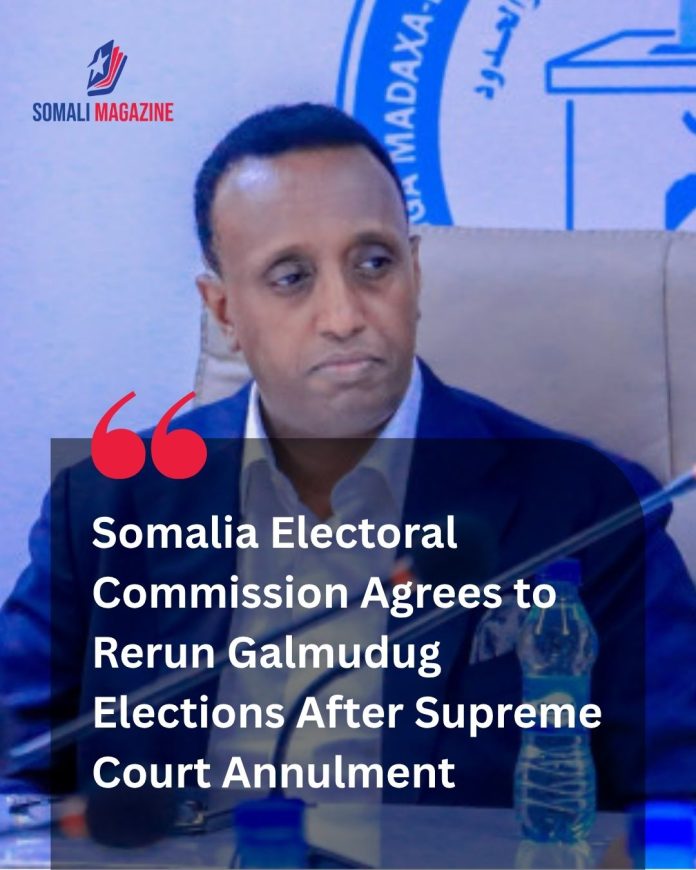
Institutional integrity in the Horn of Africa faced a defining test after the Somali electoral commission accepts Supreme Court ruling annulling Galmudug election results, agreeing to organize a fresh poll for the regional state assembly and local councils. The Federal Supreme Court, sitting under Chief Justice Baashe Yusuf Ahmed, declared the initial July 30 vote null and void due to significant procedural deviations that violated the federal constitution and established electoral statutes. By confirming its commitment to execute the judicial mandate, the National Independent Electoral and Boundaries Commission signaled that public accountability and statutory compliance must take precedence in the country’s ongoing transition toward direct democracy.
The high court’s landmark verdict followed legal petitions filed by the opposition Towfiiq Party and allied political organizations. Competitors challenged the original outcomes certified by election officials, which had granted a sweeping majority of legislative and municipal seats to the ruling Justice and Solidarity Party. Following rigorous judicial review, judges determined that operational flaws—including improper variation of statutory deadlines and vote-counting discrepancies—compromised the overall credibility of the voting process beyond partial administrative correction. To ensure continuous civic governance and prevent an administrative vacuum in the region, the court ruled that incumbent Galmudug state officials will remain in office until a lawful rerun is completed.
Reactions across Somali political circles have underscored the historical weight of the judicial decision. Prominent opposition figures and civic advocates praised the ruling as a vital step toward institutional independence, drawing comparisons to landmark historical precedents that established judicial primacy over executive power. Conversely, some federal lawmakers expressed concerns over invalidating entire district tallies rather than targeted voting locations. Despite contrasting political viewpoints, legal analysts broadly agree that judicial oversight over electoral disputes reinforces public trust in national legal mechanisms.
As the Somali electoral commission accepts Supreme Court ruling annulling Galmudug election results, attention shifts to formulating a transparent operational timetable for the upcoming rerun. Electoral officials confirmed that upcoming preparations will strictly align with constitutional guidelines to guarantee equal access, voter transparency, and security across all participating districts. Upholding judicial declarations remains essential for solidifying rule-of-law principles as Somalia continues expanding its direct one-person, one-vote democratic framework.