
Facebook

Twitter (X)

Instagram

Somali Magazine - People's Magazine
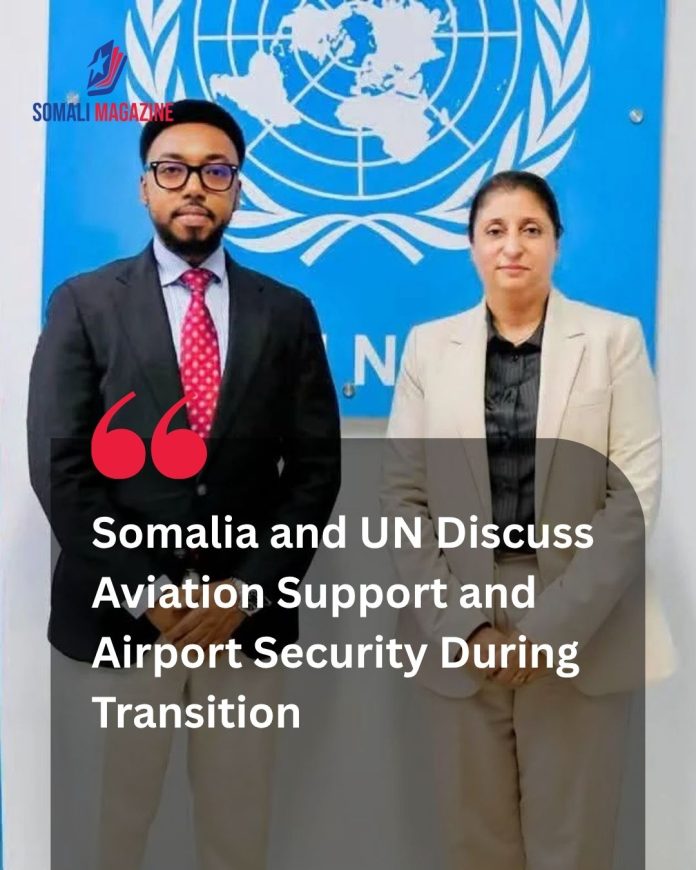
Somalia and UN discuss aviation support and airport security during transition phase as federal authorities work to build robust domestic regulatory frameworks and technical capacities. Director General of Somalia’s Ministry of Transport and Civil Aviation, Omar Afrah, recently met with the Head of the United Nations Support Office in Somalia, Qurat-ul-Ain Sadozai, in Mogadishu to review cooperative security initiatives. The high-level dialogue centered heavily on expanding technical assistance to upgrade national aviation operations, reinforce screening protocols, and enforce international airport safety standards across federal facilities.
Discussions between ministry leadership and international partners emphasized the critical importance of formulating a synchronized roadmap for the ongoing security transition period. Officials evaluated mechanisms to ensure that domestic civil aviation institutions progressively assume full administrative and operational responsibilities currently managed through external multilateral support. Strengthening professional training programs for local air traffic controllers, safety inspectors, and ground security personnel remains a vital component of this institutional handover.
The consultations also addressed the logistics of integrating advanced technological equipment and modern communication systems to monitor airspace more effectively. Transport ministry representatives noted that upgrading radar infrastructure and passenger screening protocols is essential for meeting international civil aviation compliance metrics and boosting commercial confidence. Enhanced coordination between national security agencies and international partners will ensure that regional airports maintain high security standards while facilitating safe passenger and cargo movement.
Both delegations reaffirmed their commitment to maintaining close operational alignment as the transition process advances across key government sectors. By establishing clear milestones for institutional capacity building, the collaborative effort aims to secure long-term stability and economic growth through a self-reliant aviation sector. As federal planners finalize upcoming technical benchmarks, the partnership underscores a shared dedication to sustainable development and professionalized state administration across the region.