
Facebook

Twitter (X)

Instagram

Somali Magazine - People's Magazine
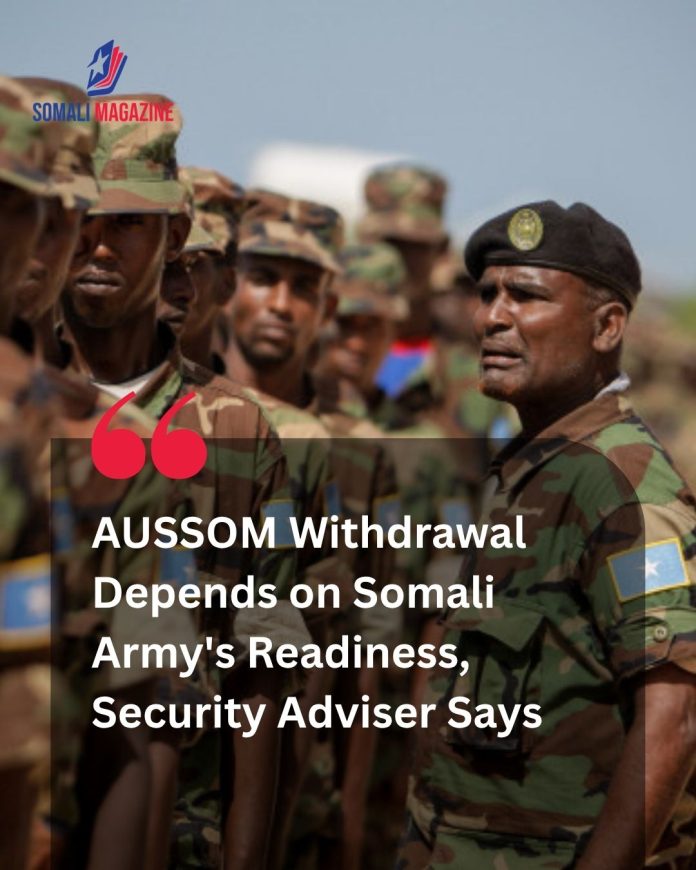
AUSSOM withdrawal depends on Somali army’s readiness, security adviser says, noting that any future troop drawdown will proceed through a carefully calibrated, phased transfer of responsibilities rather than an abrupt exit. Speaking at an official public event in Mogadishu, Somalia’s National Security Adviser, Ambassador Aweys Haji Yusuf, outlined the core parameters governing the ongoing security transition. He stressed that the federal government remains fully dedicated to assuming total ownership of national defense, but the ultimate timeline hinges directly on measurable progress in ongoing operations against al-Shabab and the continued capacity-building of domestic forces.
The security adviser explained that the nation’s strategic roadmap relies on comprehensive joint assessments conducted alongside international partners to evaluate domestic preparedness. According to government briefings, if domestic military units accelerate their operational gains and institutional capabilities strengthen, the country could absorb broader security duties ahead of current scheduling. Conversely, officials acknowledged that any unforeseen security deterioration would necessitate adjustments to the transition pace, underscoring a flexible approach designed to protect hard-won territorial stability across federal member states.
Ambassador Yusuf also highlighted that the broader national strategy integrates security reforms alongside judicial strengthening and economic development initiatives to establish durable foundations for long-term peace. Once domestic institutions fully absorb responsibilities currently managed by multilateral missions, the nature of international cooperation is expected to transition toward standard diplomatic and developmental partnerships. Federal authorities continue coordinating closely with regional and global allies to ensure that the phased drawdown maintains operational momentum without creating security vacuums.
As military planners review upcoming benchmarks, the administration maintains that disciplined institutional growth and sustained frontline pressure remain paramount. Regional analysts observe that transparent communication regarding the transition timeline helps align stakeholder expectations and reinforces public confidence in domestic security institutions. With strategic milestones approaching, federal leaders reiterate their commitment to building a self-reliant security apparatus capable of safeguarding the nation’s long-term sovereignty.