
Facebook

Twitter (X)

Instagram

Somali Magazine - People's Magazine
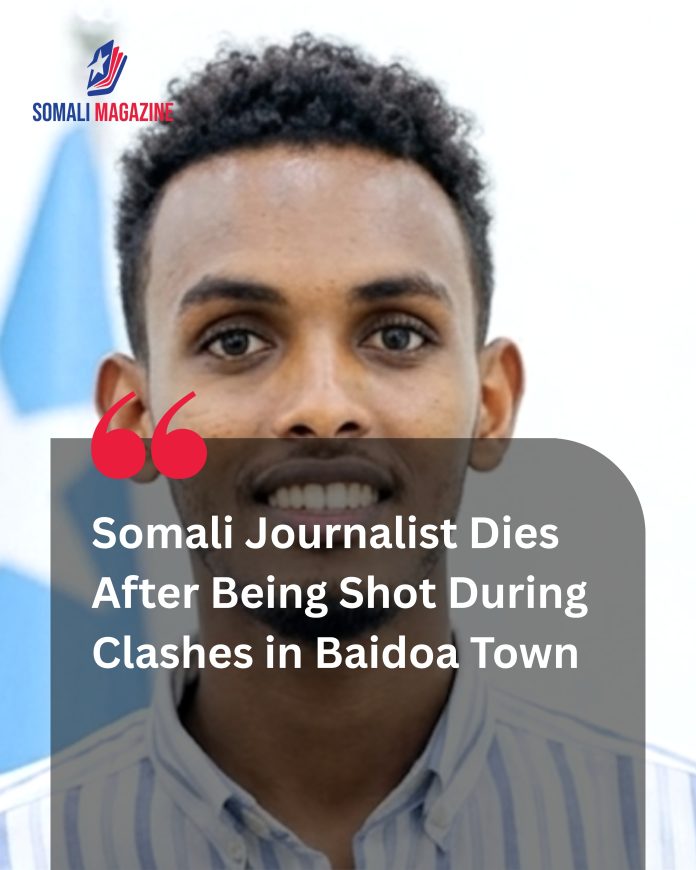
Somali journalist dies after being shot during clashes in Baidoa town, marking a devastating loss for the nation’s independent media community and intensifying concerns over civilian safety during regional armed confrontations. Bashir Mohamed Abdullahi, a dedicated young reporter working with the local Arlaadi Media Network, succumbed to severe gunshot wounds early Monday morning. The fatal injuries were sustained days earlier when intense fighting erupted in the northern Al-Ahmaar neighborhood of Baidoa, pitting government forces against armed groups loyal to former Southwest State leadership.
According to preliminary accounts documented by press freedom organizations, the twenty-three-year-old reporter was struck by gunfire while attempting to carry out professional reporting duties amidst the volatile security situation. Emergency responders rushed him to Bay General Hospital, where medical personnel performed immediate surgery to address critical abdominal trauma. Although family members and colleagues coordinated logistical arrangements to transfer him to Mogadishu for advanced specialized care, his medical condition deteriorated rapidly before the evacuation could take place. His untimely passing makes him the first media worker killed in the country this calendar year, reigniting urgent conversations regarding the chronic risks faced by reporters.
The National Union of Somali Journalists issued a vehement condemnation of the killing, demanding immediate transparency and a thorough, independent investigation to bring the perpetrators to justice. Union leaders emphasized that media personnel operate strictly as civilians fulfilling a public service and must never become targets during political or military skirmishes. Civil society groups across the region echoed these sentiments, pointing out that unpunished violence against press workers creates a chilling effect that undermines democratic accountability and the public’s right to verified information during crises.
International observers and humanitarian agencies tracking the unfolding stability crisis in Southwest State have repeatedly urged all armed factions to exercise restraint and uphold international humanitarian law. The heavy toll of the recent Baidoa clashes—which left dozens of civilians injured and hospitals overwhelmed—underscores the urgent necessity of protecting non-combatants. As colleagues, family members, and advocacy groups mourn the loss of a promising young voice, pressure continues to mount on institutional authorities to ensure that those responsible for this violent attack face formal legal accountability.