Facebook

Twitter (X)

Instagram

Somali Magazine - People's Magazine
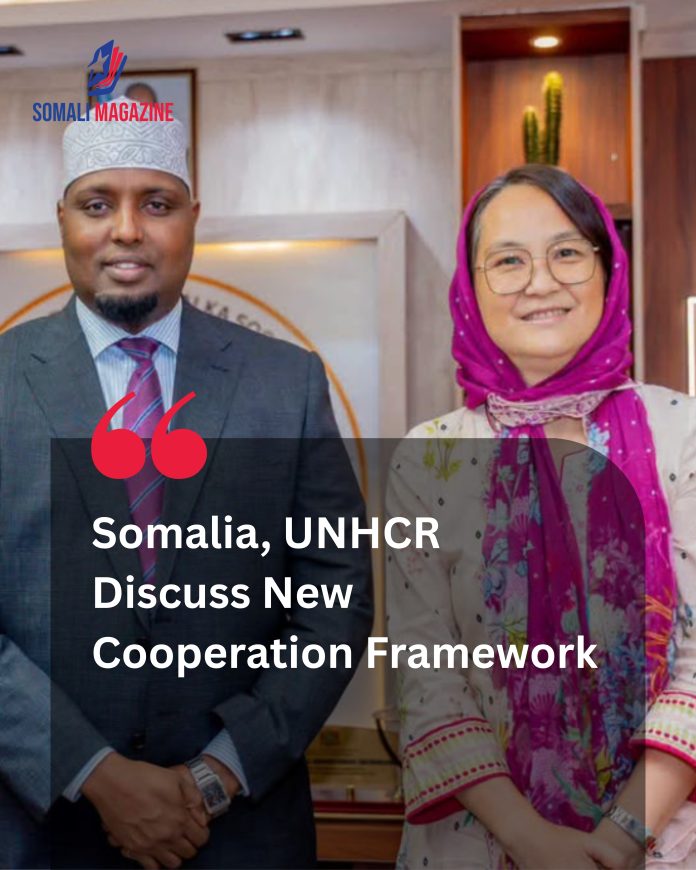
Somalia, UNHCR discuss new cooperation framework aimed at refining strategic priorities, optimizing coordination mechanisms, and defining precise operational roles for both parties. The high-level dialogue took place in Mogadishu when the Minister of Planning, Investment and Economic Development, Mohamud Sheikh Farah Beenebeene, hosted the United Nations refugee agency’s Deputy and Acting Representative in Somalia, Jing Song. The consultative meeting focused heavily on ensuring that upcoming humanitarian and relief interventions seamlessly integrate into the broader architecture of the nation’s overarching development agenda.
Government officials highlighted that aligning international humanitarian support with domestic policy goals is essential for addressing long-term displacement challenges sustainably. During the discussions, both delegations evaluated methods to synchronize ongoing agency programs directly with the strategic priorities outlined in the National Transformation Plan. Particular emphasis was placed on strengthening collaborative oversight across planning, monitoring, and evaluation sectors, ensuring that every humanitarian initiative contributes measurably to institutional resilience and community stability across regional member states.
The proposed agreement seeks to establish a transparent, predictable roadmap that bridges short-term relief efforts with long-term structural development objectives. Representatives from the planning ministry noted that clearer institutional frameworks reduce operational redundancy and empower local authorities to direct resources where they are most urgently needed. By fostering deeper coordination between state institutions and international partners, the government aims to create durable solutions for displaced populations while reinforcing national governance frameworks.
International stakeholders and humanitarian organizations monitoring the Horn of Africa have welcomed the renewed commitment to structured cooperation. Effective alignment between UN agencies and state ministries provides mutual benefits, offering international partners stable operational guidelines while enabling local leadership to steer public policy effectively. As technical drafting committees continue to refine the specifics of the upcoming accord, federal officials remain dedicated to fostering partnerships that advance both human rights and sustainable national progress.