
Facebook

Twitter (X)

Instagram

Somali Magazine - People's Magazine
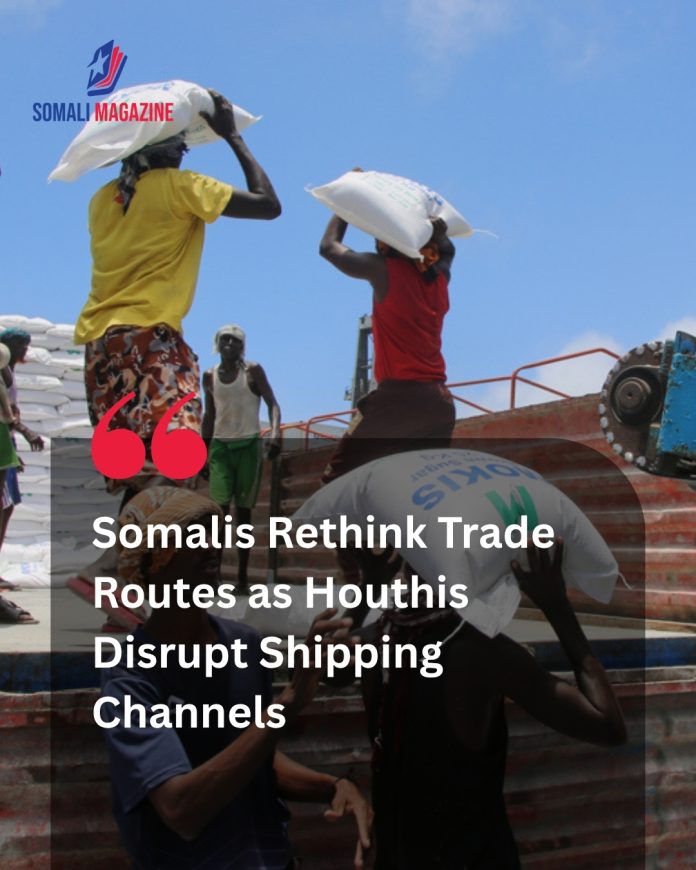
Somalis rethink trade routes as Houthis disrupt established shipping channels in response to escalating regional security threats that continue to reshape international maritime commerce. Merchants, importers, and logistics operators across the Horn of Africa are confronting mounting logistical hurdles as persistent attacks in the southern Red Sea and the Gulf of Aden force major carriers to alter schedules and bypass traditional maritime pathways. The resulting disruptions have triggered notable delays in cargo deliveries, driving up operational expenses and impacting consumer prices for essential commodities within domestic markets.
Commercial stakeholders note that navigating these volatile waters requires a fundamental shift in supply chain management and regional trade strategies. Importers who previously relied on predictable, direct container shipping schedules from Asia and the Middle East are now exploring alternative land and sea corridors, including enhanced port utilization along the Indian Ocean coastline. Business associations report that increased war risk insurance premiums and extended transit times are squeezing profit margins for small and medium-sized enterprises, necessitating adaptive financial planning and increased inventory buffering.
Economic analysts emphasize that the ongoing instability highlights the acute vulnerability of regional economies to geopolitical conflicts unfolding just beyond their territorial waters. Federal trade authorities, in collaboration with private sector leaders, are reviewing long-term logistics alternatives to secure stable import channels for foodstuffs, raw materials, and manufactured goods. Strengthening domestic port infrastructure and expanding direct bilateral shipping agreements with unaffected nations are increasingly viewed as vital steps toward insulating local markets from external maritime shocks.
As the security situation in vital maritime choke points remains fluid, commercial resilience has become an urgent priority for business communities across the region. Importers continue to monitor developments closely while adjusting pricing models and supply networks to absorb the ongoing friction. Through pragmatic adaptation and diversified trade partnerships, regional merchants are striving to maintain economic continuity despite the profound disruptions affecting global maritime arteries.