
Facebook

Twitter (X)

Instagram

Somali Magazine - People's Magazine
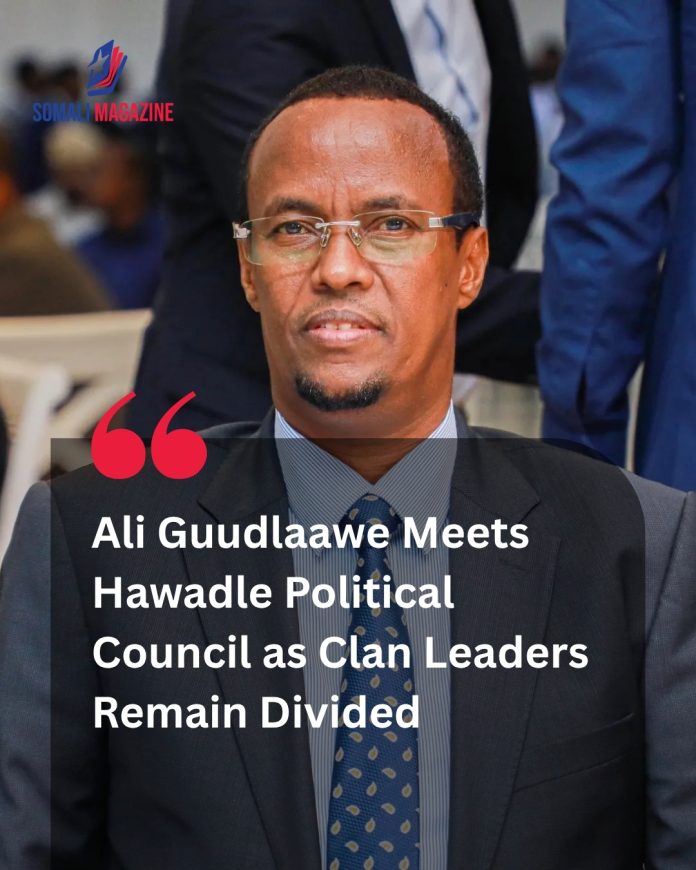
Ali Guudlaawe meets Hawadle political council as clan leaders remain divided during a critical diplomatic outreach effort in the capital aimed at defusing escalating political tensions across the federal member state. The incumbent regional president sat down with influential traditional elders and community representatives to address mounting grievances surrounding the upcoming administrative succession. The high-level consultation comes in the wake of intense disputes over power-sharing frameworks and the ruling party’s decision to endorse a single candidate for the upcoming regional polls.
Political stakeholders from the Hiiraan region have expressed strong dissatisfaction with the current electoral trajectory, arguing that marginalized constituencies deserve greater representation in the state’s top leadership. The discussions focused heavily on bridging the widening gap between regional authorities and community factions who contend that unilateral candidate selection undermines inclusive governance. While leadership figures emphasized the necessity of maintaining institutional stability, community representatives pressed for a formalized political accord to address long-standing regional power imbalances before any ballots are cast.
The unfolding political crisis highlights the delicate balance between centralized party mechanisms and entrenched clan dynamics within central Somalia. Analysts note that securing broad-based cooperation from foundational communities is vital for sustaining regional security and development initiatives, particularly given the heavy security burdens borne by local populations. Observers continue to monitor whether the ongoing dialogue will yield meaningful compromises or whether deeper polarization will persist as the electoral calendar moves closer to its scheduled conclusion.
As consultations between the regional administration and community councils continue, pressure mounts on federal and local leaders to prioritize consensus-building over partisan consolidation. The overarching challenge remains establishing a credible, inclusive framework that satisfies diverse stakeholder interests while preserving constitutional order. Both regional actors and community elders face a narrow window to reconcile competing visions for the future governance of the federal member state.