
Facebook

Twitter (X)

Instagram

Somali Magazine - People's Magazine
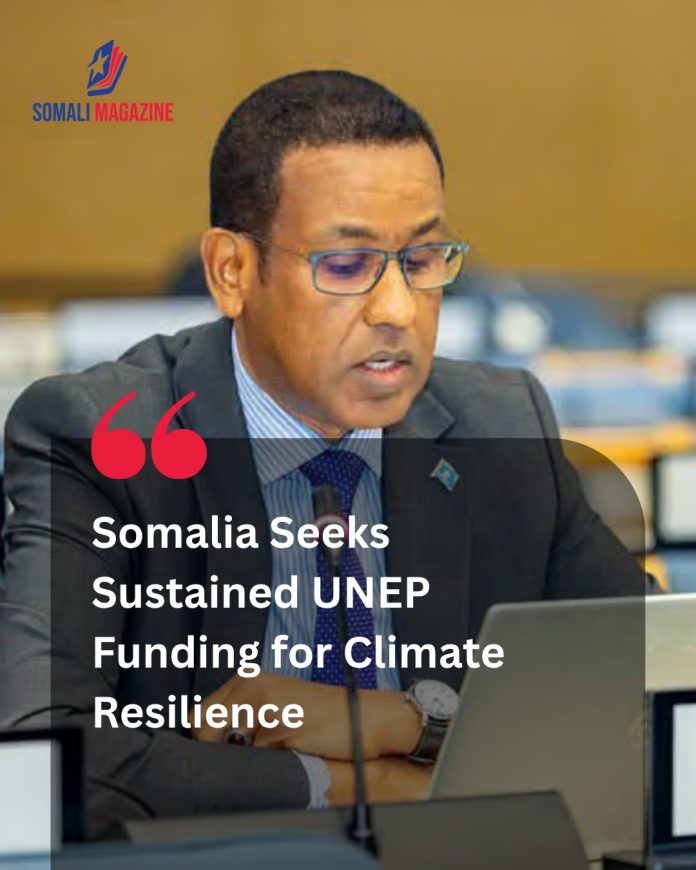
Somalia seeks sustained UNEP funding to strengthen climate resilience as federal authorities actively urge international partners to provide predictable financial backing for long-term adaptation initiatives. Speaking at the 175th meeting of the United Nations Environment Programme’s Committee of Permanent Representatives held in Nairobi, the nation’s diplomatic delegation emphasized that securing consistent resources is essential to transforming environmental commitments into practical solutions for local populations. Government representatives highlighted that recurring environmental shocks, ranging from severe droughts to destructive floods, continue to threaten agricultural productivity, rural livelihoods, and fragile infrastructure throughout the federal member states.
During the high-level international consultations, Somalia’s permanent representative to the agency outlined core national priorities centered on sustainable water management, advanced environmental data development, and comprehensive disaster risk reduction. The federal government formally welcomed ongoing institutional support from international bodies, pointing to vital frameworks such as the Jowhar Offstream Storage Programme and the National Cooling Action Plan as critical steps toward building environmental stability. Officials noted that these collaborative programs provide an essential foundation for safeguarding natural resources and mitigating the compounding pressures of resource scarcity and population displacement across vulnerable regions.
The diplomatic address also stressed the pressing need for African nations to secure a stronger voice and more active role in global environmental decision-making processes. Urging stronger South-South cooperation and enhanced institutional capacity, the delegation pointed out that locally driven adaptation strategies require robust multilateral backing to succeed. As federal agencies prepare for potential weather hazards associated with the upcoming Deyr rainy season, including heavy precipitation and strong coastal winds, the administration underscored the urgency of scaling up early warning systems and community-level preparedness mechanisms.
International stakeholders and partner organizations acknowledged the profound climate vulnerabilities facing the Horn of Africa, noting that bridging the gap between humanitarian response and long-term resilience building remains paramount. Observers emphasized that predictable multi-year investments are indispensable for empowering local institutions to address chronic environmental challenges effectively. As diplomatic engagements in Nairobi conclude, federal authorities remain committed to fostering strategic partnerships that ensure sustainable development, protect fragile ecosystems, and secure a resilient future for communities across the nation.