
Facebook

Twitter (X)

Instagram

Somali Magazine - People's Magazine
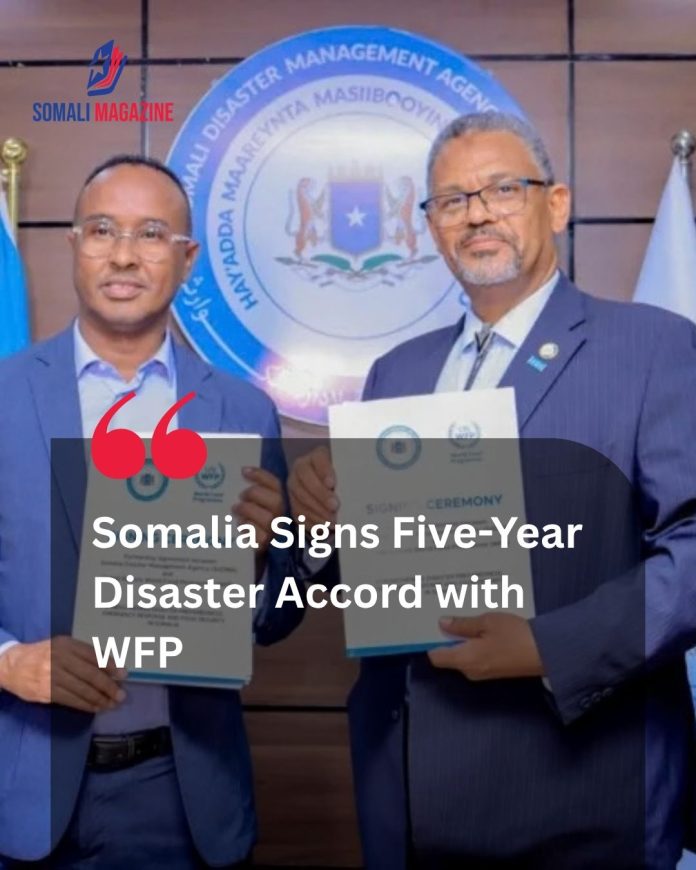
Somalia’s Disaster Agency, WFP Sign Five-Year Preparedness Agreement to significantly enhance national resilience against recurring climate-related shocks and humanitarian crises. The landmark accord was officially finalized in Mogadishu by the Somali Disaster Management Agency chairperson, Mohamud Moallim Abdulle, alongside the United Nations World Food Programme representative in Somalia, Hameed Nuru. Designed to span five years, the strategic partnership aims to overhaul the nation’s approach to emergency management by shifting from reactive crisis management toward proactive risk reduction and anticipatory action.
The collaborative framework focuses heavily on improving precise risk forecasting, upgrading early warning networks, and executing interventions before climate hazards escalate into full-scale emergencies. Officials from both organizations highlighted that the agreement directly addresses critical vulnerabilities tied to food security, supporting communities frequently displaced or distressed by severe weather patterns. By institutionalizing long-term cooperation, SoDMA and the WFP intend to build robust structural capabilities that protect vulnerable populations and safeguard vital community assets across urban and rural regions.
During the signing ceremony, leadership underscored that mitigating the impacts of climate change requires deeply integrated institutional systems and continuous planning. The initiative aligns closely with broader national development goals aimed at transforming Somalia’s disaster response architecture into a dependable framework capable of swift execution. Stakeholders noted that strengthening local institutional readiness not only minimizes human suffering during droughts or floods but also preserves long-term economic stability for families relying on agriculture and livestock.
As implementation gets underway, the partnership will prioritize comprehensive community outreach, data-driven vulnerability assessments, and enhanced coordination between humanitarian actors and government bodies. Both agencies expressed a shared commitment to turning these strategic blueprints into tangible protections on the ground, ensuring that local populations receive timely alerts and targeted assistance. This cooperative milestone marks an essential step forward in addressing the complex environmental challenges facing the region through sustained multilateral collaboration.