
Facebook

Twitter (X)

Instagram

Somali Magazine - People's Magazine
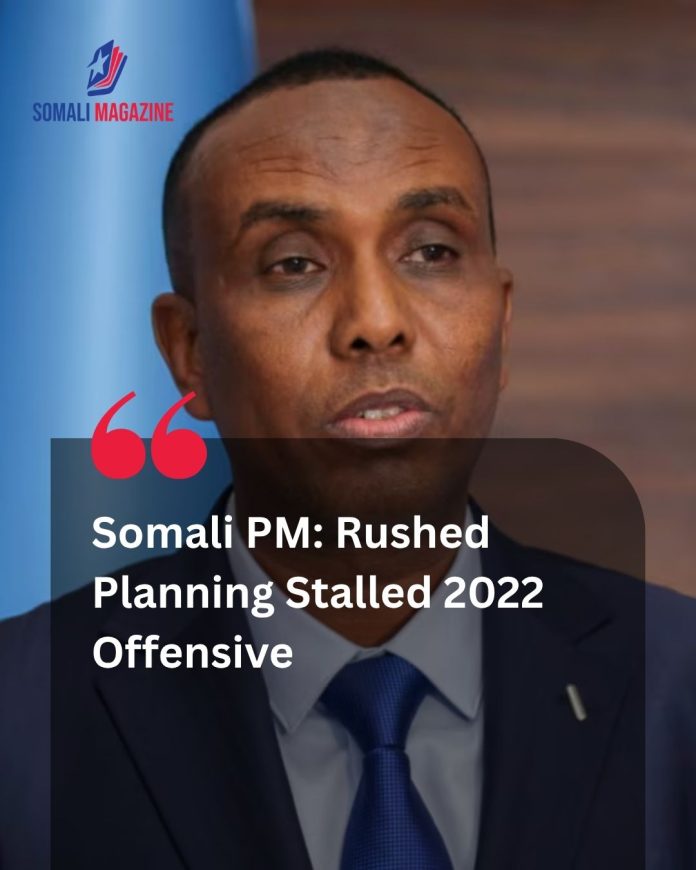
Strategic miscalculations and compressed preparation timelines severely hampered Somalia’s 2022 Al-Shabaab offensive, according to candid official evaluations that shed light on past counter-terrorism limitations. When security forces initially mobilized across central regions to reclaim territory from the militant group, federal leadership faced immense pressure to deliver swift territorial victories. However, contemporary administrative reviews and security assessments indicate that the urgency to launch operations sidelined critical logistical planning, sustainable supply chains, and community stabilization frameworks necessary for long-term holding operations.
Prime Minister Hamza Abdi Barre noted that inadequate planning and the rapid deployment of newly recruited troops played a major role in compromising initial operational objectives. According to government evaluations, some recently recruited soldiers were sent to the frontlines after undergoing only limited training. In several instances, advancing forces pushed farther than had been adequately planned, forcing tactical withdrawals and subsequent redeployments into defensive positions to consolidate ground.
The ambitious campaign, while achieving notable initial territorial gains with local clan backing, struggled with the absence of robust consolidation mechanisms. This gap left newly liberated areas vulnerable to militant counter-attacks and exposed systemic vulnerabilities within federal military coordination. Officials familiar with the operational reviews emphasize that sustainable counter-insurgency requires meticulous institutional preparation rather than accelerated deployment schedules.
As security planners evaluate lessons learned from the Somalia 2022 Al-Shabaab offensive, current administrative policies increasingly prioritize institutional capacity building, enhanced inter-agency intelligence sharing, and permanent infrastructural support for frontline communities. This critical self-reflection by federal authorities highlights an evolving strategic doctrine within Mogadishu, shifting away from rushed campaigns toward methodical, community-backed security operations designed to secure lasting stability across vulnerable regions.