
Facebook

Twitter (X)

Instagram

Somali Magazine - People's Magazine
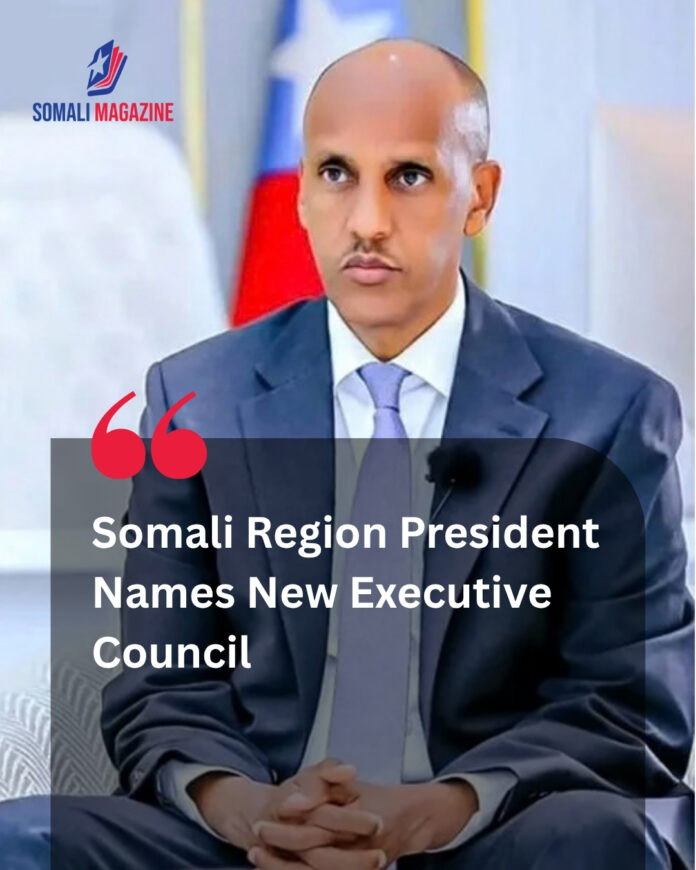
Somali region president names new executive council after reelection as regional leadership moves swiftly to consolidate administrative priorities for the upcoming legislative term. President Mustafe Mohamud Omar officially announced the appointment of a new 27-member Executive Council following his recent reelection victory by regional lawmakers in Jigjiga. The sweeping appointments mark the first major administrative milestone of his extended mandate, setting the institutional framework required to drive governance, economic growth, and social services across the territory.
The cabinet formation follows a high-stakes legislative session where parliamentarians from the seventh council also reelected Ibrahim Osman Farah as vice president and chose Mubashir Dubad Rage as the new speaker of the regional house. Having steered the regional administration through significant political evolutions since 2018, the president’s latest mandate secures another five-year term to advance ongoing developmental initiatives. The newly unveiled executive body is tasked with managing core pillars of regional development, including public security, financial planning, infrastructure expansion, health, and education.
Political analysts observing the transition note that the carefully selected council balances continuity with strategic restructuring to address evolving local needs. The administration faces a crucial period focused on enhancing public service delivery, strengthening institutional accountability, and fostering sustainable economic progress across the diverse districts of the Somali Regional State. Observers emphasize that effective coordination between the newly appointed executive members and regional legislative bodies will be essential in fulfilling key campaign commitments and addressing community expectations.
As the newly formed cabinet prepares to assume official duties, regional stakeholders and international partners look forward to the implementation of targeted policy agendas. The rapid finalization of the leadership structure underscores a commitment to administrative stability and uninterrupted governance. With a clear mandate now in place for the 2026-2031 governance cycle, the regional government aims to accelerate infrastructural projects and strengthen local resilience against broader socio-economic challenges.