
Facebook

Twitter (X)

Instagram

Somali Magazine - People's Magazine
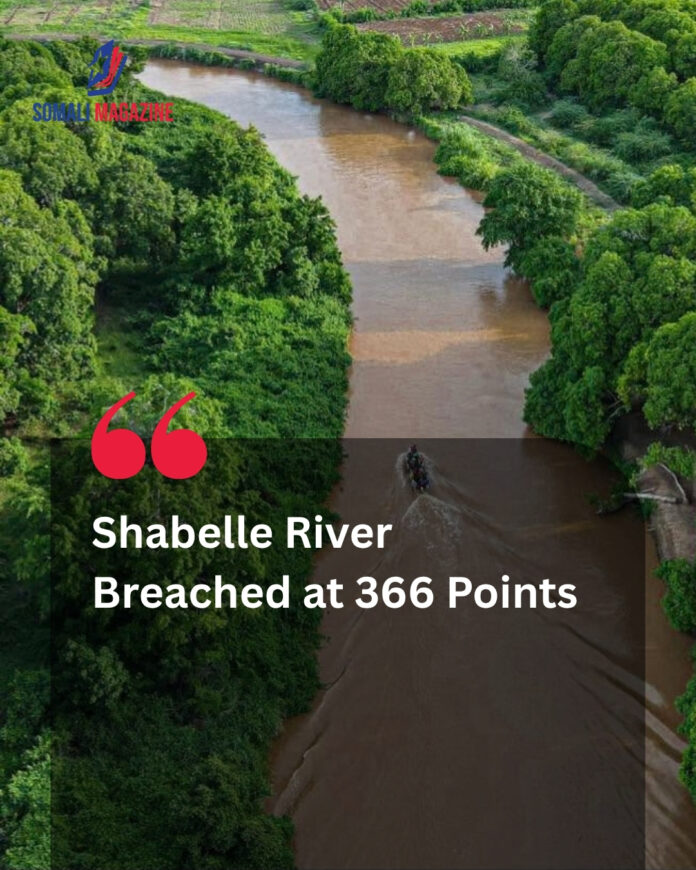
Somali’s Shabelle River breached at 366 points, SODMA warns of flood risk as federal authorities sound the alarm over escalating environmental dangers in south-central regions. The Somali Disaster Management Agency released an urgent alert indicating that hundreds of critical locations along the vital waterway have given way, significantly amplifying the threat of widespread inundation. With heavy seasonal downpours and anticipated El Nino weather patterns converging, communities living in low-lying agricultural zones face immediate hazards that could upend local livelihoods and displace vulnerable families.
Agency officials highlighted that ongoing security challenges in specific rural corridors have severely restricted routine maintenance and riverbank reinforcement efforts. Certain sections passing through contested territories—such as the vital stretches between Jalalaqsi and Mahadaay—have experienced structural alterations, including segments where parts of the river channel were filled or compromised. This lack of unfettered access for engineering teams has left crucial embankments vulnerable to erosion and structural failure under the pressure of rising water volumes.
The impending threat extends far beyond displaced populations, threatening to devastate vast tracts of productive agricultural land and ruin crops essential for regional food security. Furthermore, potential floodwaters risk destroying vital community infrastructure, including rural health posts, localized water networks, and sanitation facilities, which historically triggers secondary public health crises such as waterborne disease outbreaks. Local authorities are under intense pressure to accelerate emergency preparedness initiatives before water levels rise further.
In response to the mounting crisis, federal and regional response teams are actively reviewing contingency plans, identifying safe evacuation corridors, and pre-positioning relief supplies across high-risk districts. Coordination efforts involving local administrative bodies, traditional elders, and public communication networks are underway to ensure that communities receive timely warnings. Stakeholders emphasize that proactive mitigation, reinforced river management, and sustained international humanitarian support remain indispensable to protecting lives and mitigating the long-term impacts of cyclical flooding across Somalia.