
Facebook

Twitter (X)

Instagram

Somali Magazine - People's Magazine
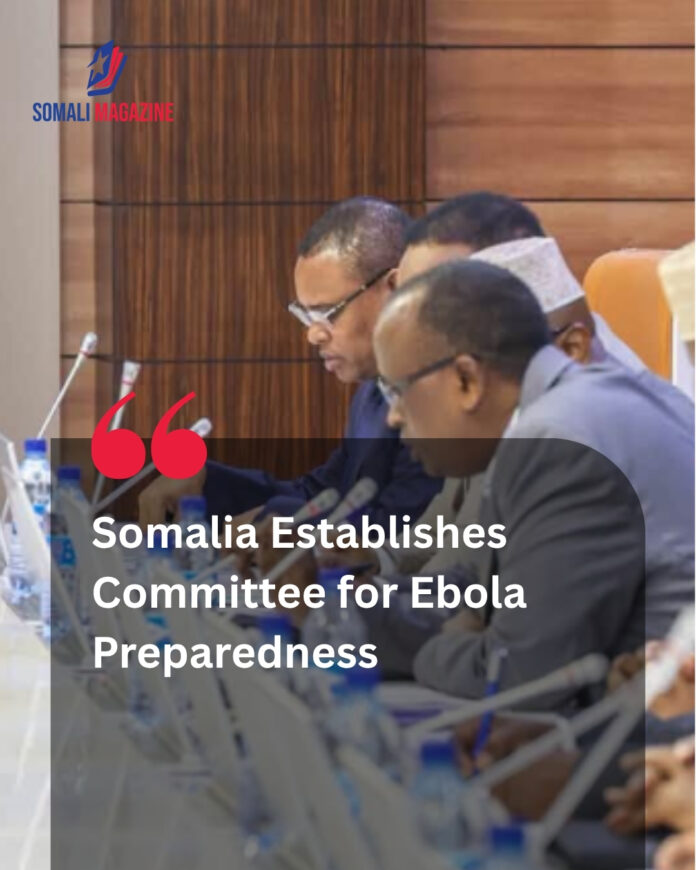
Somalia sets up committee to prepare for Ebola threat as federal authorities move swiftly to insulate the country from potential cross-border public health risks. During a high-level legislative session, the federal cabinet officially approved a comprehensive resolution establishing a dedicated multi-ministerial task force tasked with coordinating national prevention strategies. Chaired by Second Deputy Prime Minister Jibril Haji Abdi, the newly formed committee brings together six key government bodies, including the Ministries of Health, Security, Foreign Affairs, Transport, Information, and Livestock, to ensure an integrated and rapid response framework.
The proactive administrative decision comes in the immediate wake of neighboring Kenya confirming its first imported case of the viral disease. Health officials emphasized that the interconnected nature of regional travel and commerce necessitates heightened vigilance across all major transit hubs. In response to the evolving situation, specialized medical personnel have already been deployed to Mogadishu international airport and other critical ports of entry to execute rigorous screening protocols, monitor passenger manifests, and evaluate arriving travelers for early symptoms.
Addressing the cabinet during the briefing, representatives from the Ministry of Health and Social Care outlined continuous preparedness plans aimed at strengthening rapid diagnostic capabilities and isolation procedures. The collaborative structure of the new committee ensures that security, transport, and communication sectors work in tandem with medical experts to streamline information dissemination and manage logistics effectively. Authorities are also prioritizing public awareness initiatives to educate local communities on preventative health measures and encourage immediate reporting of any unusual health indicators to designated medical facilities.
Regional administrations across the country have likewise elevated their local alert levels, reinforcing surveillance networks and coordinating closely with international health partners. Public health specialists have continually underscored that robust cross-border cooperation and early detection mechanisms remain vital in preventing localized outbreaks from escalating into broader crises. As the multi-ministerial committee begins its operational mandate, federal leadership remains firmly committed to maintaining rigorous oversight and safeguarding public health across the nation.