
Facebook

Twitter (X)

Instagram

Somali Magazine - People's Magazine
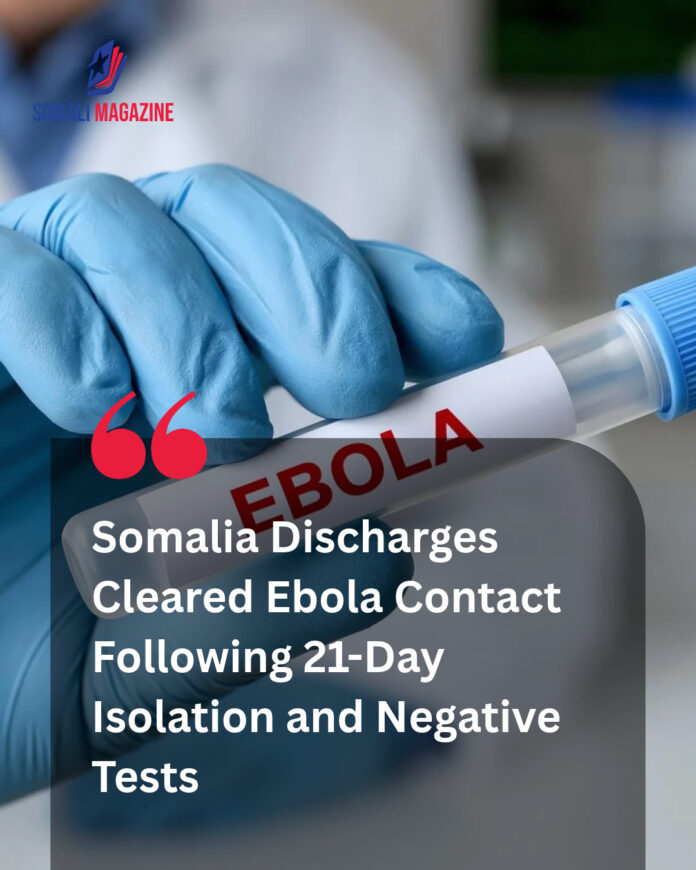
Somalia releases Ebola contact after two negative tests, 21-day quarantine following strict health monitoring protocols designed to prevent the introduction of viral hemorrhagic fevers into the country. Federal public health authorities confirmed that the individual, who had been identified during routine border surveillance after traveling from an affected regional area, successfully completed the full mandatory isolation period without exhibiting symptoms. Medical administrators verified that laboratory diagnostic evaluations conducted at the beginning and conclusion of the observation window returned negative results, allowing health officials to issue a formal medical discharge clearance.
The successful discharge underscores the heightened state of readiness across national health agencies as regional governments step up epidemiological surveillance across key transit hubs. The federal Ministry of Health, in close partnership with international public health institutions, implemented stringent quarantine guidelines requiring individuals with potential exposure histories to remain under direct clinical observation for twenty-one days, representing the maximum incubation period for the virus. State health administrators emphasized that multi-stage laboratory testing remains mandatory for all monitored travelers to guarantee public safety before re-entry into the community.
Surveillance teams and rapid-response units stationed at primary ports of entry, including Aden Abdulle International Airport and major maritime terminals, continue to operate elevated health screening measures. Arriving passengers undergo systematic body temperature evaluations, digital health declaration submissions, and travel history assessments intended to detect potential health risks early. Health experts noted that rigorous adherence to established containment procedures has proven effective in mitigating cross-border epidemiological threats while preserving public confidence in national transportation networks.
Community health organizations and public policy experts commended the structured execution of the isolation protocol, emphasizing that public transparency and clinical rigor are essential for preventing health scares. Federal institutions reaffirmed their commitment to maintaining active epidemiological tracking networks, upgrading specialized isolation facilities, and coordinating with regional healthcare counterparts to manage potential cross-border health hazards. As Somalia releases Ebola contact after two negative tests, 21-day quarantine, government authorities remain dedicated to safeguarding national biosecurity and upholding comprehensive health protection standards across all entry points.