
Facebook

Twitter (X)

Instagram

Somali Magazine - People's Magazine
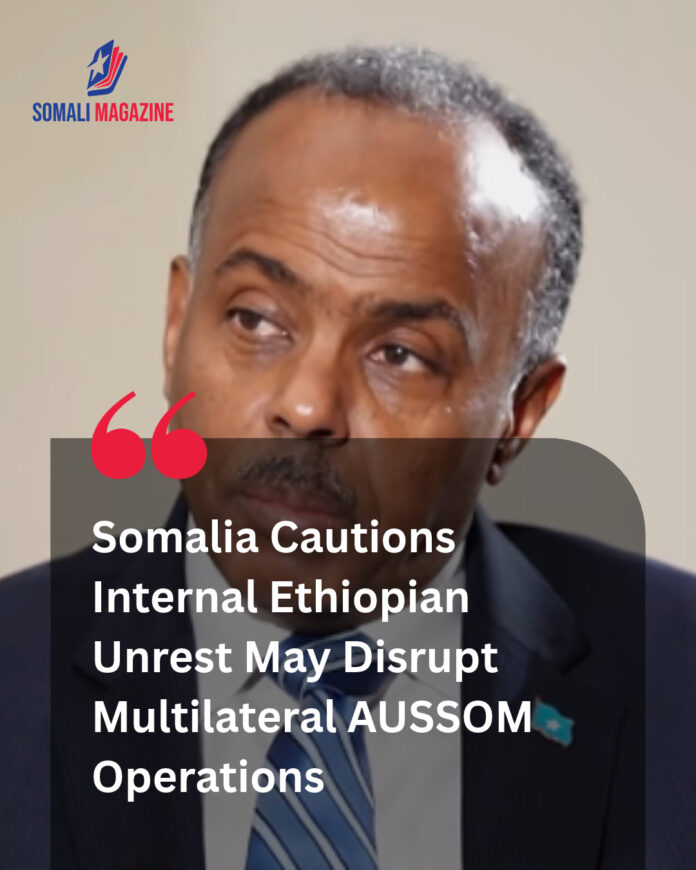
The federal government of Somalia warns Ethiopia unrest could weaken AUSSOM security operations, expressing deep concern that ongoing domestic political and security instability within neighboring Ethiopia could impact multilateral peacekeeping capabilities across the Horn of Africa. In a official security briefing released in Mogadishu, Somali defense authorities highlighted that escalating internal conflicts inside Ethiopian borders risk destabilizing the broader regional security architecture. Federal officials stressed that maintaining operational continuity for the African Union Support and Stabilization Mission in Somalia remains vital to preserving recent territorial gains made against insurgent networks.
According to security analysts and diplomatic reports, the internal strain on Ethiopian defense forces could potentially affect troop rotations, logistical supply lines, and operational readiness for peacekeepers deployed in key frontline sectors. Ethiopian forces currently contribute significant numbers to multilateral peacekeeping efforts alongside specialized bilateral deployments stationed in border areas such as Bakool, Gedo, and Bay. Somali authorities warned that if troop commitments are disrupted or suddenly altered without detailed bilateral coordination, dangerous operational vacuums could emerge, allowing militant groups like al-Shabaab to exploit security gaps.
The African Union Peace and Security Council and international diplomatic partners have repeatedly cautioned that structural adjustments to troop deployments must be carefully managed to prevent destabilizing local security conditions. Somali defense officials reaffirmed that while the national armed forces are actively expanding their capacity, multilateral military backing remains an essential pillar for safeguarding major urban centers, critical supply corridors, and newly liberated territories. Government representatives called upon regional bodies and global stakeholders to monitor security developments closely to ensure operational timelines remain synchronized and predictable.
As Somalia warns Ethiopia unrest could weaken AUSSOM security operations, national leadership maintains that safeguarding regional stability requires unyielding focus on joint counter-terrorism priorities. Federal officials reiterated their commitment to collaborating with all recognized troop-contributing countries and international security partners to protect national sovereignty. Moving forward, diplomatic representatives continue to advocate for transparent transition strategies, emphasizing that sustained security alignment across East Africa is essential to securing long-term peace and institutional stability.