Facebook

Twitter (X)

Instagram

Somali Magazine - People's Magazine
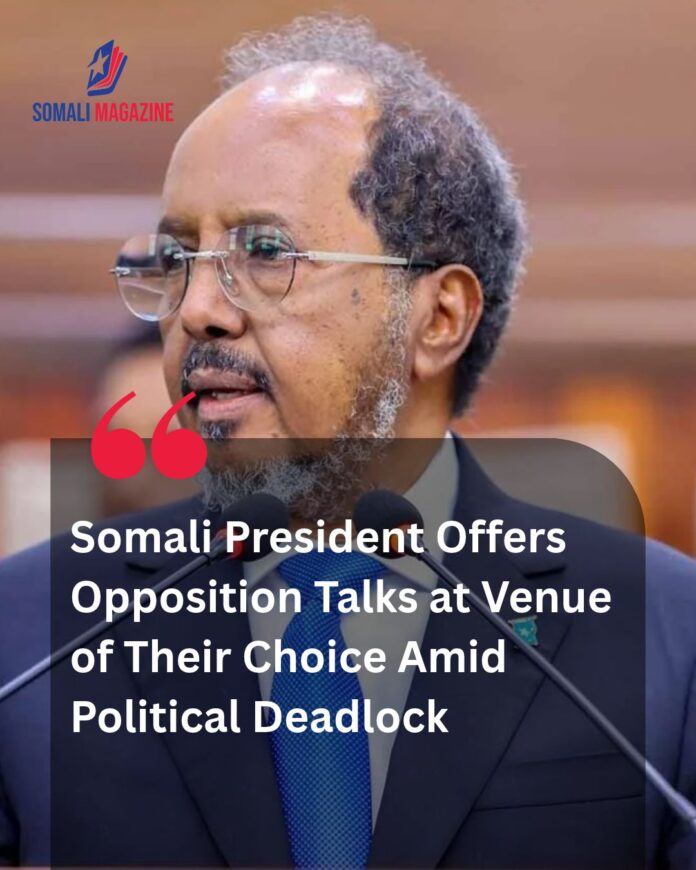
In a renewed attempt to break a prolonged constitutional and electoral impasse in Mogadishu, the Somali president offers opposition talks at venue of their choice amid political deadlock following the collapse of scheduled consultations earlier this week. According to political reports issued on Friday, November 20, 2026, President of Somalia Hassan Sheikh Mohamud signaled flexibility on the location of national negotiations after major opposition blocs boycotted a proposed November 14 to 18 conference at Villa Somalia. The concession aims to remove procedural objections raised by rival political coalitions, who previously refused to convene inside the presidential compound due to deep-seated mistrust and demands for neutral terms. While opposition alliances had not yet issued a formal joint response to the latest venue proposal, political observers view the gesture as a critical test of whether domestic leaders can bridge widening divisions.
The dispute at the heart of Somalia’s political standoff centers on controversial constitutional amendments that extended presidential and parliamentary mandates from four to five years, alongside sharp disagreements over the timetable and framework for federal elections. The federal government maintains that the constitutional revisions provide a valid legal foundation for holding elections in April and May 2027. Conversely, key opposition groupings—including the Somali Future Council, which incorporates leaders from Puntland and Jubaland, as well as figures aligned with former President Mohamed Abdullahi Farmaajo—reject those changes and insist that any credible electoral roadmap must emerge from an inclusive, negotiated consensus. Tensions escalated further on November 5 when the Supreme Court ruled that the mandates of the president and parliament had expired, a decision the federal government formally rejected.
Beyond the question of where consultations take place, significant hurdles remain over mediation arrangements and binding guarantees. Ahead of the postponed November 14 forum, opposition coalitions called for formal mediation by international partners—specifically the United States, the United Kingdom, the European Union, and Turkey—arguing that external facilitation is necessary to ensure any resulting agreement is enforced. Earlier this week, the presidency also criticized certain opposition figures and regional administrations over alleged ties with foreign governments, urging rival politicians to present their platforms directly to the Somali public rather than relying on external actors. Whether the federal government will accept formal international mediation alongside a neutral venue remains unconfirmed.
As the Somali president offers opposition talks at venue of their choice amid political deadlock, diplomatic pressure continues to mount on all sides to prevent institutional paralysis. European and regional envoys in Mogadishu have spent recent days holding parallel consultations with both government officials and former leaders to keep communication channels open. Analysts emphasize that resolving the standoff through credible domestic dialogue is vital as Somalia navigates pressing security operations against the al-Shabab terrorist group and manages delicate regional diplomacy. Moving forward, the coming days will determine whether opposition leaders accept the venue offer and return to the negotiating table.