
Facebook

Twitter (X)

Instagram

Somali Magazine - People's Magazine
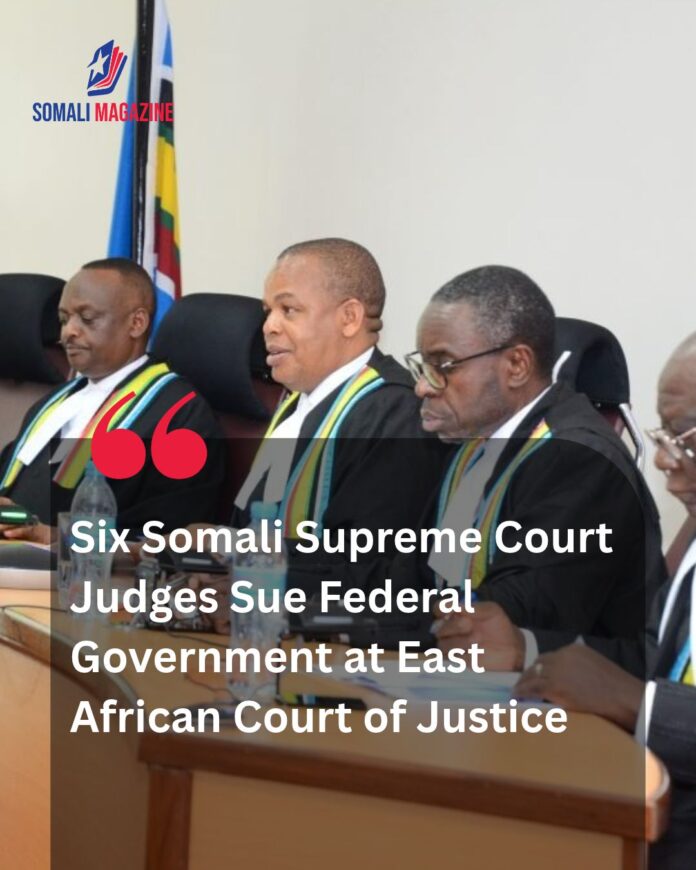
Amid a deepening constitutional and institutional crisis in Mogadishu, six Somali Supreme Court judges sue federal government at East African Court of Justice, escalating a high-stakes domestic standoff to a regional tribunal. According to court filings confirmed over the weekend, the applicants—led by disputed Chief Justice Dr. Bashe Yusuf Ahmed alongside Justices Salah Sheikh Ibrahim Diblawe, Abdikadir Idiris Essa, Dr. Abubakar Ahmed Ali, Dr. Abdikafar Hussein Isak, and Abdiaziz Mohamed Yusuf—submitted a formal reference against the Federal Republic of Somalia and the State Attorney General. Following the filing, the First Instance Division of the Arusha-based regional court issued a formal notification on November 18, 2026, under Rule 26 of its procedures, granting the Somali government 45 days to submit its response or face the possibility of default proceedings.
The legal challenge stems from a sharp confrontation between the executive and judicial branches earlier this month over presidential term limits and the removal of Somalia’s top judge. On November 4, 2026, President of Somalia Hassan Sheikh Mohamud dismissed Chief Justice Bashe Yusuf Ahmed and subsequently appointed former Chief Justice and presidential legal adviser Ibrahim Idle Suleiman as his replacement. The following day, the six justices issued a ruling declaring the dismissal null and void, arguing that the head of state lacked constitutional authority to unilaterally remove the Chief Justice while the court was adjudicating a constitutional petition challenging the extension of presidential and parliamentary mandates beyond May 2026. The judges further reported that security forces deployed around the court premises and withdrew their personal security details, prompting them to seek refuge at the Mogadishu residence of former Somali president Sharif Sheikh Ahmed.
Federal authorities in Mogadishu have firmly rejected the judges’ legal arguments and rulings. According to statements from the Ministry of Justice and the Office of the Attorney General, the Supreme Court’s ruling on term limits carries no legal effect, and preliminary objections had already been filed regarding the court’s jurisdiction, bench composition, and the claimants’ legal standing. Government officials maintain that because Somalia remains in a constitutional transition and the High Council of the Judiciary has not yet been established, removing the Chief Justice through the same transitional framework used for his nomination was lawful. Earlier in November, Mogadishu also dismissed calls from United Nations independent human rights experts who urged authorities to reinstate the Chief Justice and safeguard judicial independence.
As six Somali Supreme Court judges sue federal government at East African Court of Justice, legal observers note that the case represents an unprecedented regional test of treaty compliance and judicial autonomy in the Horn of Africa. As of Monday, November 23, 2026, the federal government had not publicly announced whether it will contest the reference in Arusha, leaving the next legal and political steps in Somalia’s constitutional impasse closely watched by domestic stakeholders and regional partners.