
Facebook

Twitter (X)

Instagram

Somali Magazine - People's Magazine
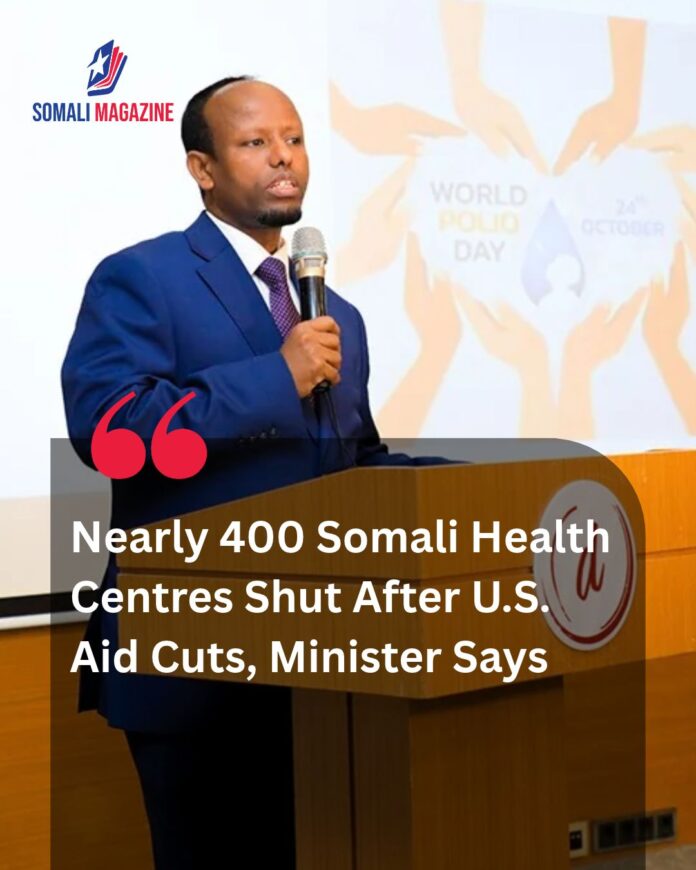
Somalia’s fragile public healthcare system is confronting acute operational strain as nearly 400 Somali health centres shut after U.S. aid cuts, minister says, underscoring the country’s heavy reliance on external humanitarian financing. According to remarks by Federal Minister of Health and Human Services Dr. Ali Haji Adan during an interview on Dawan Media’s Miizaan Podcast reported this week, up to 400 health facilities and several mobile clinics funded through humanitarian assistance ceased operating after funding from the U.S. Agency for International Development (USAID) came to an end. Adan stated that Somalia’s health financing has long depended on foreign aid, leaving community-level clinics directly exposed when emergency donor budgets contract. However, the minister did not specify which regions or districts experienced the closures or provide an exact figure for the number of patients who have lost access to medical care.
Despite the widespread disruption to humanitarian-funded clinics, Adan emphasized that nearly 600 health facilities supported through long-term health development projects continue to operate across the country. He expressed hope that those development-backed centers would sustain services even as emergency assistance shrinks. The minister’s disclosure aligns with warnings issued earlier in 2026 by United Nations agencies and international humanitarian organizations. In August, UNICEF reported that global aid reductions had already forced the closure of more than 200 health and nutrition facilities in Somalia and reduced essential service coverage by 30 percent, warning that up to 618 facilities nationwide could close under severe funding shortfalls.
Humanitarian agencies and public health researchers have noted that clinic closures particularly affect rural and displaced communities, where preventive care, maternal services, and early nutrition screening help avert life-threatening emergencies. UNICEF officials previously observed a sharp rise in children arriving at specialized stabilization centers with severe acute malnutrition after community clinics shut down, forcing families to travel longer distances for treatment amid drought, flooding, and conflict. Health analysts also warn that weakened primary healthcare networks reduce early detection and vaccination coverage for preventable outbreaks such as cholera and measles.
As nearly 400 Somali health centres shut after U.S. aid cuts, minister says, policymakers and international partners face mounting pressure to bridge funding gaps and strengthen domestic health financing. Whether alternative international donors or federal budgetary allocations will step in to reopen the shuttered facilities remains unconfirmed.