
Facebook

Twitter (X)

Instagram

Somali Magazine - People's Magazine
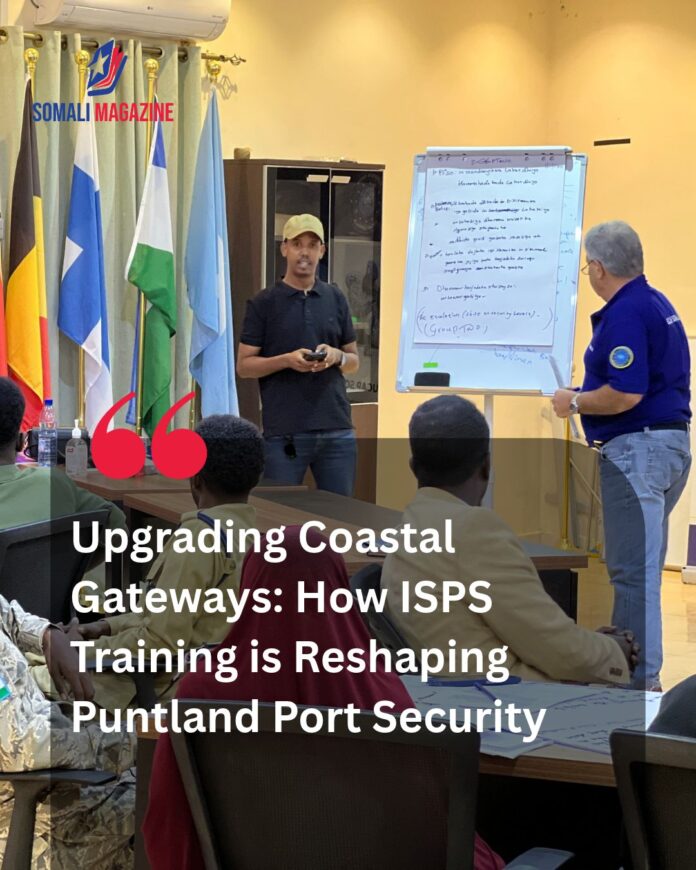
Efforts to reinforce Puntland port security have gained renewed momentum following a specialized training initiative led by the European Union Capacity Building Mission in Somalia. Designed to align regional maritime gateways with international safety benchmarks, the program focuses on implementing the International Ship and Port Facility Security Code across key coastal hubs in northern Somalia.
According to official mission briefings, the technical workshops brought together port facility security officers, maritime police units, and regional transport officials in Puntland. The curriculum addresses critical operational vulnerabilities, including access control, cargo screening, threat assessment, and emergency response protocols. By equipping local personnel with standardized procedures, the European Union mission aims to ensure that coastal facilities can effectively detect and deter illicit maritime activities while facilitating legitimate international trade.
Maritime trade serves as a primary economic lifeline for the Federal Member State of Puntland, with hubs such as Bosaso handling substantial volumes of livestock exports and commercial imports along the Gulf of Aden. However, maintaining compliance with global maritime regulations remains a persistent challenge for Somali maritime infrastructure. Without strict adherence to the ISPS Code, regional ports risk higher insurance premiums, shipping delays, and reduced access to international commercial networks.
Officials involved in the capacity-building program noted that sustained mentorship is essential to translating regulatory frameworks into daily operational habits. Rather than relying solely on classroom instruction, the recent sessions emphasized practical exercises and inter-agency coordination between civilian port authorities and coastal security forces. These joint drills are intended to clarify chains of command during potential security incidents, reducing response times and preventing operational bottlenecks.
The broader maritime security landscape off the Horn of Africa continues to require vigilant oversight. While large-scale piracy incidents have declined significantly compared to previous decades, regional authorities and international partners remain focused on countering smuggling, illegal fishing, and transnational trafficking networks. Strengthening Puntland port security directly supports wider federal and regional stabilization goals by securing vital revenue streams and reinforcing state governance along the coastline.
As implementation progresses, maritime analysts indicate that long-term success will depend on consistent resource allocation and ongoing technical audits by regional authorities. Further details regarding the timeline for full facility certification across Puntland’s secondary ports have not yet been publicly confirmed. Nonetheless, the collaboration between local maritime officials and EUCAP Somalia represents a measured, structural step toward integrating northern Somali ports into the global maritime economy safely and reliably.