
Facebook

Twitter (X)

Instagram

Somali Magazine - People's Magazine
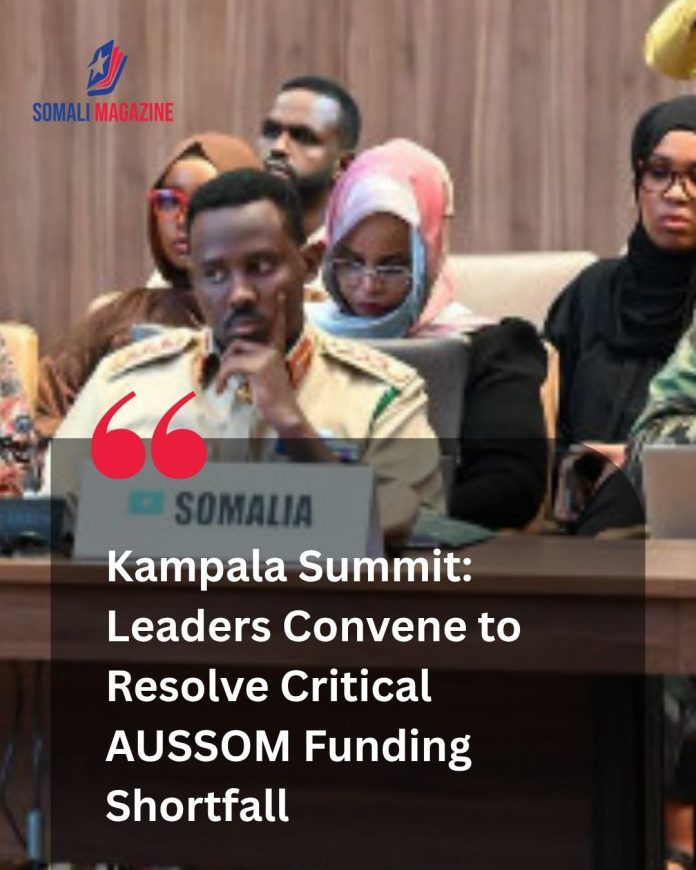
African leaders gather in Kampala as AUSSOM funding crisis looms over Somalia security summit, marking a pivotal moment for the future of regional stability in the Horn of Africa. The three-day Extraordinary Summit of Troop-Contributing Countries (TCCs), which commenced on Wednesday, July 29, 2026, at the Speke Resort Munyonyo in Uganda, brings together heads of state, defense chiefs, and international partners to confront the severe financial instability threatening the African Union Support and Stabilization Mission in Somalia (AUSSOM). The high-stakes assembly is tasked with securing a sustainable path forward before the mission’s current authorization expires on December 31, 2026.
The urgency of the Kampala meeting stems from a recent notification by the United States to the United Nations, signaling that Washington will no longer provide funding for the mission through the proposed UN-assessed contributions model. As AUSSOM relies heavily on these funds to cover critical logistical costs—including aviation support, troop transport, and field sustainment—this withdrawal places the mission under unprecedented strain. Security analysts warn that a sudden funding vacuum could force a premature drawdown, potentially creating a security void that Al-Shabaab militants are poised to exploit to regain control of previously recovered territories.
Participating nations, including Somalia, Uganda, Kenya, Ethiopia, Djibouti, Burundi, and Egypt, are working to forge a unified position on resource mobilization. Throughout the summit, military commanders and defense ministers have evaluated the mission’s operational performance, stressing that while Somali security forces are gradually assuming greater responsibility, they remain dependent on international backing to maintain momentum against insurgency. With the theme “To Sustain the Stabilisation Process in Somalia,” the delegates are exploring alternative financing frameworks to ensure that the transition toward full Somali national security responsibility is not derailed by fiscal deficits.
Beyond the immediate financial concerns, the summit unfolds against a backdrop of domestic political fragility in Somalia. Opposition leaders have utilized the platform to urge regional heads of state to advocate for an inclusive national transitional council, citing concerns over delayed elections and expired constitutional terms. As the heads of state prepare to conclude the summit on Friday, July 31, their final communiqué is expected to dictate whether the African Union maintains a robust military presence or pivots toward a new, politically focused stabilization model. Ultimately, as African leaders gather in Kampala as AUSSOM funding crisis looms over Somalia security summit, the decisions made this week will define the security landscape of the region for years to come.