
Facebook

Twitter (X)

Instagram

Somali Magazine - People's Magazine
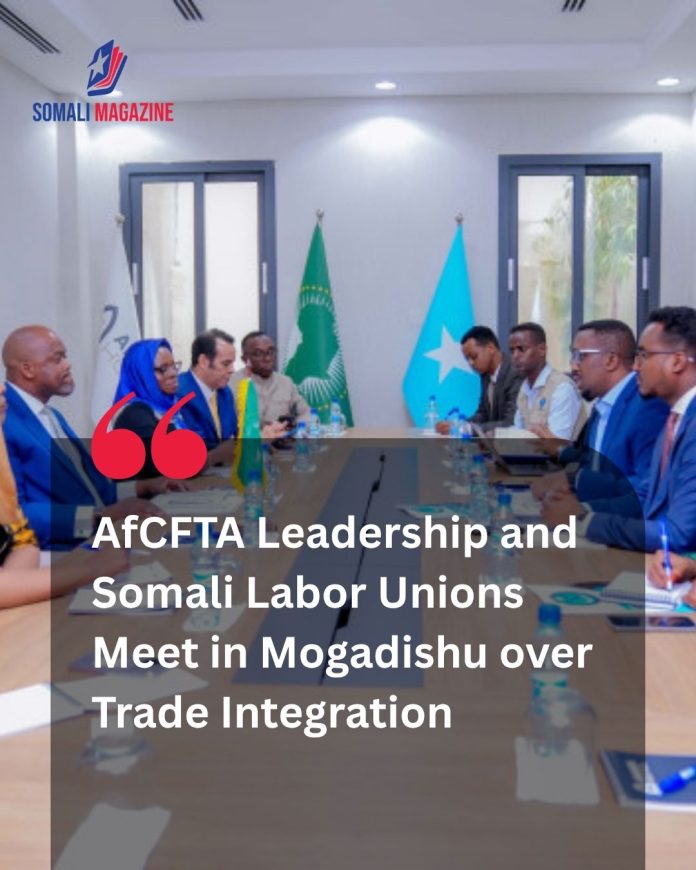
High-level economic talks unfolded in Mogadishu as the AfCFTA chief, FESTU discuss Trade Unions’ role as Somalia moves into Africa’s Free Trade Market during an official continental delegation visit. The Secretary-General of the African Continental Free Trade Area Secretariat, Wamkele Mene, met with representatives from the Federation of Somali Trade Unions, led by General Secretary Omar Faruk Osman, to evaluate how organized labor can actively shape continental integration. Following Somalia’s formal ratification of the landmark trade agreement, discussions focused on transitioning the nation from policy approval to practical participation within Africa’s expansive single market of over 1.4 billion people.
During the consultative sessions, organized labor leaders emphasized that economic liberalisation and cross-border commercial frameworks must directly prioritize fair employment conditions, wage protections, and fundamental labor rights. The federation argued that working people serve as the core drivers of national production and services, insisting that trade union representatives must participate in governance structures from the initial stages of implementation rather than after major policy shifts occur. Highlighting positions aligned with regional trade confederations, labor officials advocated for institutionalized social dialogue and permanent labor representation within continental trade bodies.
The Secretariat leadership acknowledged the importance of structured engagement with labor institutions, noting that sustainable economic growth depends on inclusive frameworks that generate decent employment opportunities. Officials commended ongoing tripartite cooperation involving the government, private enterprise, and labor unions, citing Somalia’s collaborative approach as a positive model for continental integration. Discussions also touched upon expanding domestic manufacturing capabilities under a dedicated regional strategy, encouraging local processing so that Somali industries participate as active producers and exporters rather than sole consumers of imported goods.
The strategic dialogue reflects a growing movement to align trade expansion with social protections as East African economies deepen continental ties. Government authorities and trade representatives confirmed that continued consultations will remain central to executing national policy directives, ensuring that regional market integration delivers tangible economic benefits to local communities, working families, and expanding domestic industries.