
Facebook

Twitter (X)

Instagram

Somali Magazine - People's Magazine
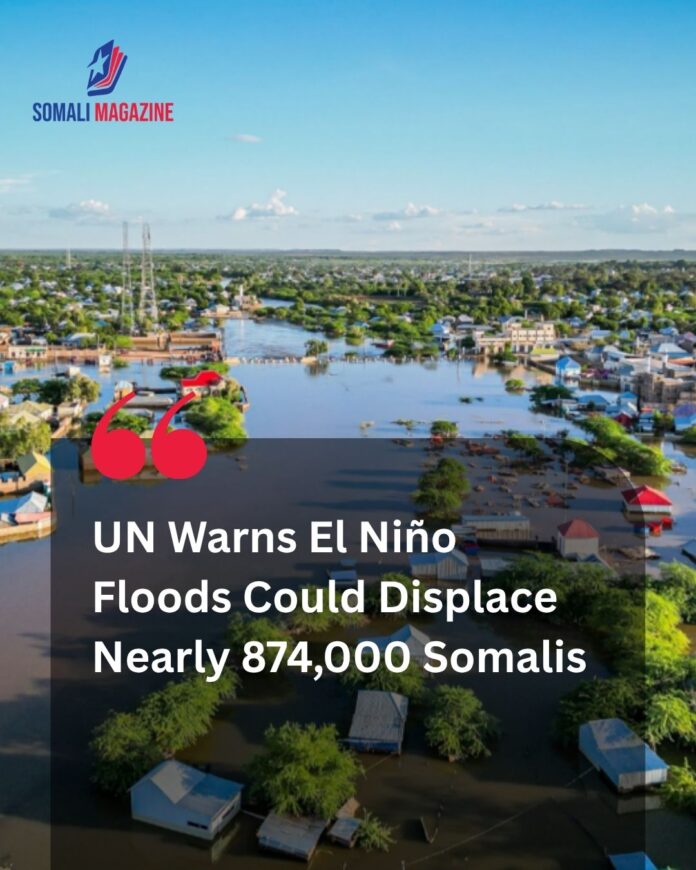
UN agency warns 874,000 in Somalia could be displaced by floods between October and December as torrential rains and swelling river basins threaten vulnerable communities. Projections developed jointly by the International Organization for Migration (IOM) and the Danish Refugee Council indicate that severe flooding will account for approximately 92 percent of total internal displacement during the ongoing rainy season. The severe climate warning comes as strengthening El Niño conditions bring above-normal rainfall expectations across the Horn of Africa, compounding hardships for populations already recovering from prolonged drought and repeated displacement cycles.
Hydrological observations confirm that early signs of rising water levels are already emerging along major river systems in central and southern regions. In Dollow, the Jubba River is rapidly approaching critical flood thresholds, while the Shabelle River continues to swell near its bank limits in Jowhar. Humanitarian assessments highlight that urban centers such as Beletweyne and Gaalkacyo face the greatest operational risk, with nearly 229,000 and 82,000 residents respectively endangered by potential overflow. Uncontrolled floodwaters threaten to inundate agricultural fields, destroy critical infrastructure, contaminate local drinking water sources, and trigger outbreaks of waterborne diseases in crowded IDP settlements.
Despite the imminent crisis, international aid agencies face severe resource constraints that hamper emergency preparedness and response operations. Representatives from the IOM disclosed that the organization has secured only 14.4 percent of the $16.62 million required to execute disaster response plans intended to protect more than 517,000 high-risk individuals. UN officials and Somali relief agencies are appealing to global donors for urgent funding interventions to fortify riverbanks, establish early warning communication networks, clear drainage corridors, and stockpile life-saving emergency shelter and medical supplies.
Federal authorities and international partner organizations are accelerating technical coordination to bolster community resilience before peak river surges hit rural districts. Emergency task forces are working with local administrations to map out safe evacuation routes and pre-position relief items near vulnerable floodplains. Humanitarian directors emphasize that rapid funding mobilization remains essential to prevent widespread displacement and avoid catastrophic humanitarian fallout across vulnerable riverine zones. As a UN agency warns 874,000 in Somalia could be displaced by floods, relief institutions urge immediate global solidarity to mitigate the impending climate shock.