
Facebook

Twitter (X)

Instagram

Somali Magazine - People's Magazine
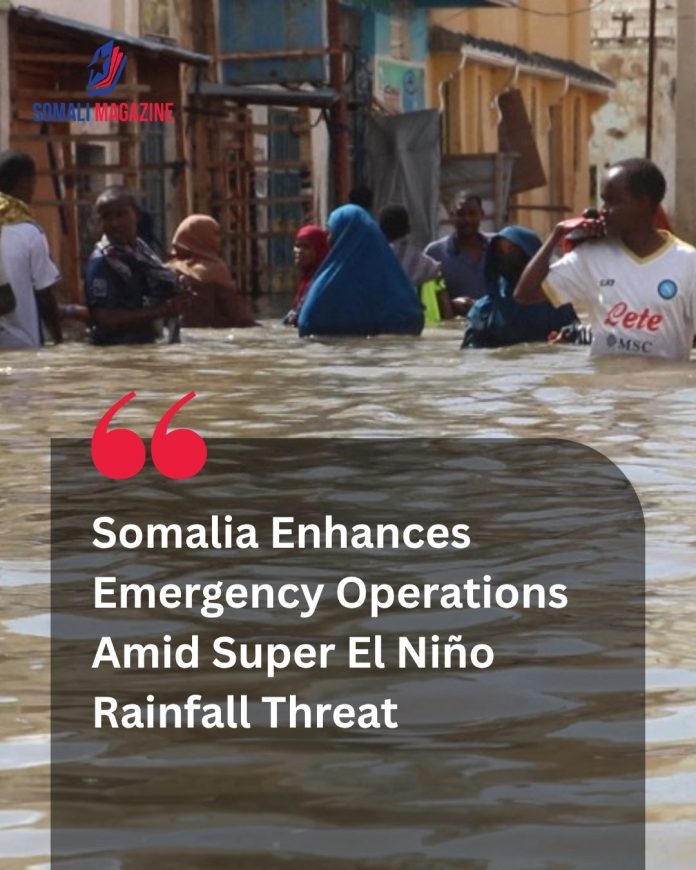
Somalia steps up flood preparedness as Super El Niño raises heavy rain concerns, prompting federal emergency management authorities and national military leadership to align operational resources ahead of expected extreme weather patterns. The Somali Disaster Management Agency convened high-level consultative meetings in Mogadishu with the commander of the Somali Air Force to establish a synchronized disaster response framework. Official assessments indicate that the approaching rainy season, exacerbated by intense weather phenomena in the Pacific Ocean and favorable sea surface temperatures in the Indian Ocean, presents a severe threat of widespread riverine and flash flooding across low-lying agricultural corridors.
Under the newly coordinated defense and civil protection strategy, the national air force will deploy helicopters and unmanned aerial vehicles to carry out rapid aerial reconnaissance and deliver emergency relief to isolated communities. Federal officials emphasized that aerial logistics remain crucial for reaching vulnerable populations along the Juba and Shabelle river basins, where seasonal overflows frequently submerge roadways and cut off land transport routes. Early warning units within state disaster agencies are also accelerating community-level communication protocols, utilizing telecommunications networks and local media broadcasts to broadcast real-time flood advisories across high-risk districts.
International humanitarian partners, including the Food and Agriculture Organization, have aligned their anticipatory action initiatives with federal government preparations to mitigate the economic and human toll of the severe weather pattern. Field teams are actively inspecting weak river embankments, clearing critical drainage bottlenecks around major barrage installations, and pre-positioning emergency food reserves and medical supplies in regional hubs. Financial support mechanisms, including targeted forecast-based cash assistance, are being deployed to enable vulnerable agricultural and pastoral households in floodplain zones to secure essential supplies and relocate to higher ground before heavy downpours commence.
The proactive mobilization reflects a broader policy shift within Somali governance toward risk forecasting, preventative infrastructure maintenance, and early climate intervention. Local authorities in urban centers, including Mogadishu and Baidoa, are conducting maintenance on municipal drainage channels to minimize standing water hazards that typically exacerbate displacement and waterborne disease risks during heavy precipitation events. As meteorological agencies continue monitoring regional weather indicators, federal institutions maintain that robust inter-agency coordination, clear public communication, and timely international financial support remain essential to safeguarding lives and preserving critical infrastructure throughout the vulnerable rainy period.