
Facebook

Twitter (X)

Instagram

Somali Magazine - People's Magazine
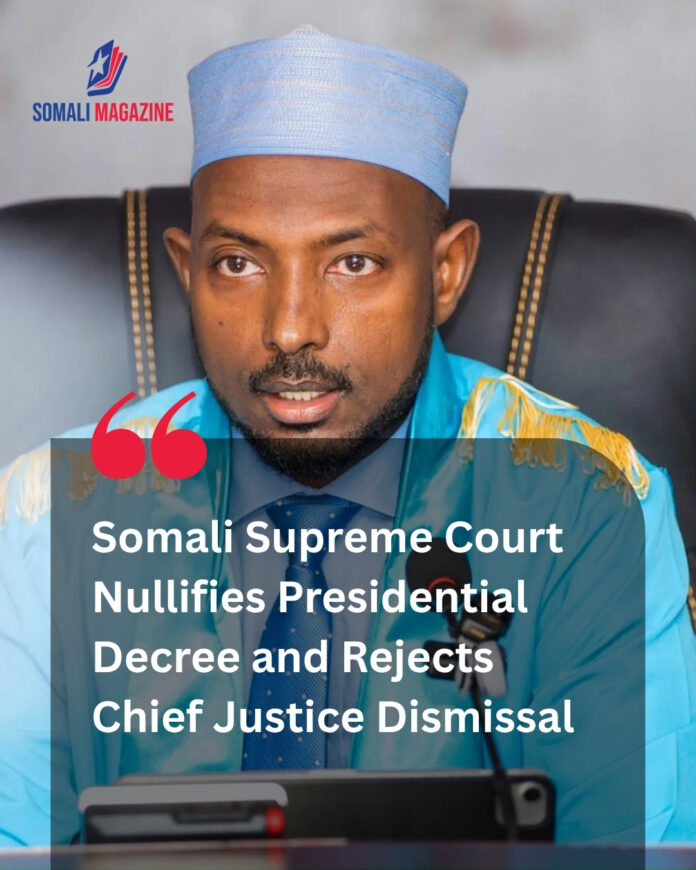
The Somali Supreme Court rejects chief justice’s dismissal, accuses president of interfering in constitutional case following an official ruling that declared the executive decree removing Chief Justice Baashe Yusuf Ahmed unconstitutional, null, and void. The judicial panel issued a formal statement affirming that the President of Somalia lacks the legal authority to unilaterally dismiss the head of the judiciary. According to the court’s bench, statutory procedures mandate that any removal or appointment of the chief justice must originate through formal recommendations from the Supreme Judicial Council and receive legislative confirmation from Parliament.
The unprecedented ruling comes directly in response to an executive decree issued by President Hassan Sheikh Mohamud, which sought to replace Baashe Yusuf Ahmed with former Chief Justice Ibrahim Idle Suleiman. The presidency cited administrative complaints from judges and legal professionals regarding internal court management as the justification for the leadership change. However, the Supreme Court rejected those administrative claims as baseless, asserting that the executive action represented a direct attempt to obstruct an active constitutional challenge pending before the highest bench regarding major legislative amendments and electoral mandates.
The legal confrontation has sparked significant concern among opposition leaders, political analysts, and legal experts across Mogadishu. Opposition figures reported that security forces were deployed near judicial premises following the decision, raising fears of an escalating constitutional crisis between the executive branch and the judiciary. Legal scholars emphasized that maintaining judicial independence and adhering to constitutional frameworks are essential to preserving national stability and preventing administrative paralysis within government institutions.
As the Somali Supreme Court rejects chief justice’s dismissal, accuses president of interfering in constitutional case, international partners and domestic stakeholders are monitoring the situation closely. Legal bodies have called upon all state institutions to respect the separation of powers and uphold the rule of law. The ongoing standoff underscores the delicate nature of the nation’s legal infrastructure as political leaders and judicial authorities navigate complex questions surrounding constitutional authority and democratic governance.