Facebook

Twitter (X)

Instagram

Somali Magazine - People's Magazine
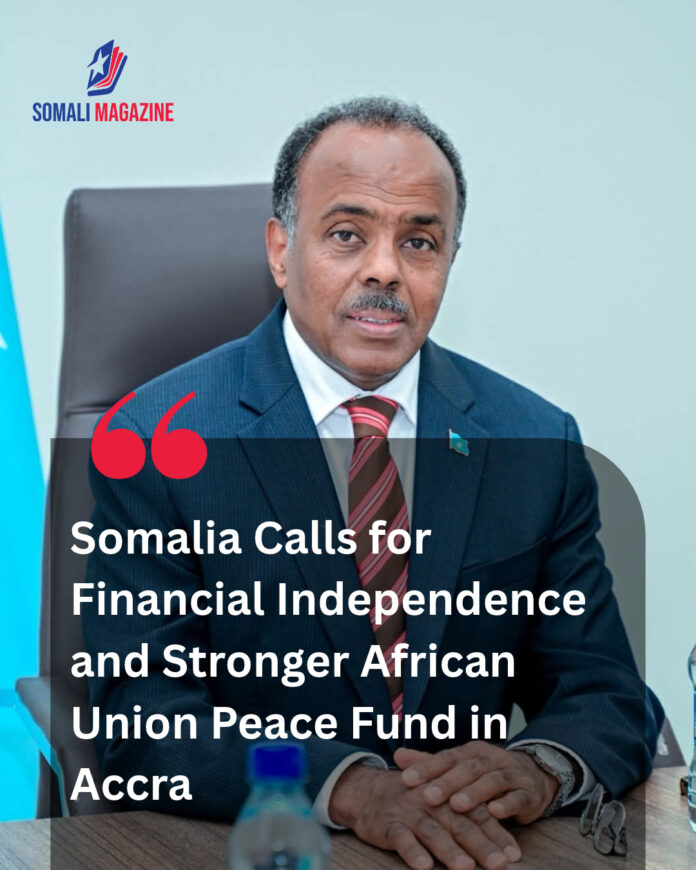
During an extraordinary session of the African Union Executive Council held in Accra, Ghana, Somalia calls for financial independence and stronger African Union Peace Fund to reduce reliance on unpredictable external donors and secure sustainable financing for continental security missions. Representing Mogadishu at the November 13 high-level ministerial gathering, Minister of State for Foreign Affairs Ali Mohamed Omar emphasized that building a self-financing mechanism is essential for protecting African sovereignty and advancing long-term institutional stability. According to a statement issued by Somalia’s Ministry of Foreign Affairs, the minister urged member states to accelerate the implementation of the Kigali decision, which establishes a 0.2 percent levy on eligible imports from outside the continent to fund African Union operations.
The appeal comes at a critical juncture for Somalia, which remains a central focus of African Union peace and security efforts. Since January 2025, the African Union Support and Stabilization Mission in Somalia, known as AUSSOM, has operated alongside the Somali National Army to counter al-Shabaab militants and gradually transfer full security responsibilities to domestic forces. However, funding shortfalls and shifting international donor commitments have placed mounting financial strain on the mission. Recent diplomatic communications and joint assessments by the African Union and European Union warned that declining external support and expected reductions in logistical assistance risk undermining hard-won stabilization gains unless predictable, home-grown financing mechanisms are solidified.
In his address to fellow ministers and finance officials in Accra, Omar acknowledged the ongoing contributions of African Union member states to AUSSOM through the bloc’s Peace Fund. He noted that revenue generated through investments from the fund should continue supporting Africa’s strategic security priorities and addressing urgent operational requirements. Alongside domestic resource mobilization, the Somali delegation backed institutional reforms aimed at streamlining the mandate and administrative functions of the African Union Commission to eliminate duplication and improve accountability. Somalia also welcomed deeper cooperation with African multilateral financial institutions to mobilize continental capital.
As Somalia calls for financial independence and stronger African Union Peace Fund, broader consensus appeared to build among participating delegations in Accra regarding the urgency of financial reform. Representatives from Kenya, Nigeria, and other member states similarly warned that external donor dependency limits the bloc’s strategic autonomy. Recommendations formulated during the Accra session are scheduled to be submitted for consideration by African Heads of State and Government at their 40th Ordinary Session in January 2027. Moving forward, observers note that translating these financing commitments into steady revenue flows will be vital to sustaining AUSSOM and empowering African-led solutions to continental security challenges.