
Facebook

Twitter (X)

Instagram

Somali Magazine - People's Magazine
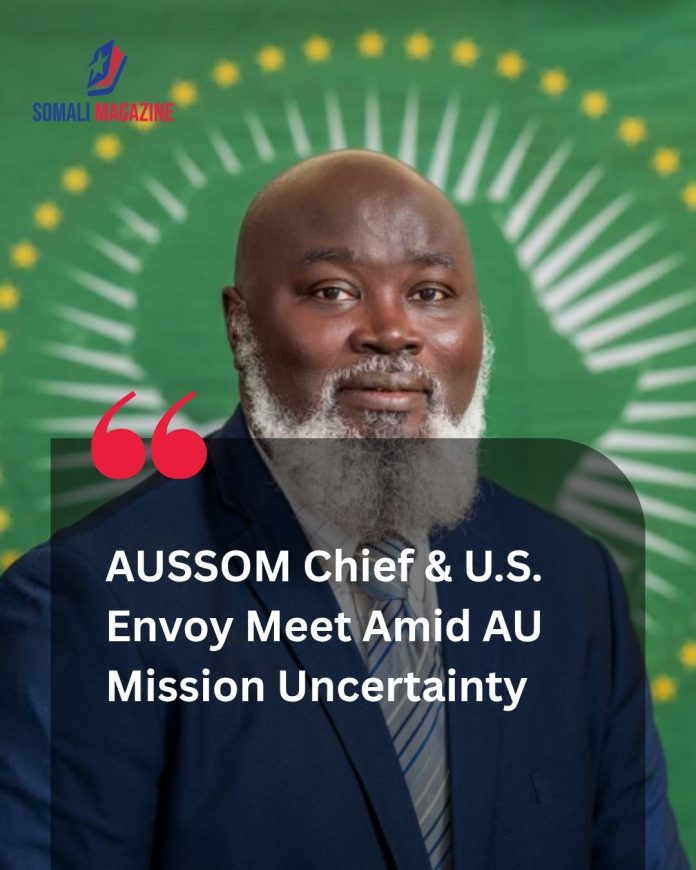
High-level diplomatic consultations unfolded in Mogadishu after the AUSSOM chief meets U.S. envoy amid uncertainty over AU mission support following reported policy shifts regarding long-term international funding and logistical frameworks. Ambassador El Hadji Ibrahima Diene, Special Representative of the Chairperson of the African Union Commission and head of the African Union Support and Stabilization Mission in Somalia, convened a strategic meeting with Davis Justin, the chargé d’affaires of the United States Embassy to Somalia, at mission headquarters. Official statements confirmed that the dialogue centered on AUSSOM’s operational mandate, emerging regional security dynamics, and the broader implications of impending funding adjustments on counterterrorism efforts across southern and central Somali sectors. Both representatives reaffirmed the vital necessity of sustained bilateral cooperation to preserve hard-won security gains and advance long-term stability across the Horn of Africa.
The strategic dialogue comes amidst widespread concern within diplomatic circles following indications that Washington intends to oppose the continuation of United Nations logistical support for the mission starting in 2027. Under existing arrangements, the United Nations Support Office in Somalia provides critical operational lifelines, including fuel, food rations, troop transport, and emergency medical evacuations, which sustain nearly 12,000 African Union peacekeepers deployed across 49 frontline locations. Military advisers from troop-contributing countries warn that withdrawing the multi-million-dollar logistics package would severely constrain operational mobility, leaving peacekeepers vulnerable to asymmetric attacks and complicating supply delivery along hazardous transit corridors. Financial analysis indicates that while AUSSOM required nearly $190 million for troop reimbursements in the current financial year, confirmed international pledges cover only a portion of the operational budget, creating severe structural deficits.
In response to the mounting financial and operational uncertainties, the African Union Commission has initiated urgent consultations with regional stakeholders, calling on the Federal Government of Somalia to participate in strategic planning sessions in Addis Ababa and Kampala. These high-level meetings aim to evaluate alternative force structures, potential bilateral financing mechanisms, and transition protocols ahead of an extraordinary summit of troop-contributing nations. Security experts note that a sudden disruption in mission support could compromise key supply routes and create operational vacuums, particularly as national security forces continue building capacity to assume full defense responsibilities against al-Shabaab insurgents. Consequently, regional partners emphasize the necessity of establishing a predictable financing model to prevent security setbacks during ongoing counteroffensive operations.
Despite the funding headwinds, joint operations involving African Union forces and Somali national security units continue to target extremist strongholds across Hirshabelle, Jubaland, and Southwest State. Diplomatic representatives in Mogadishu stress that maintaining close coordination between international donors, the African Union, and the Somali federal leadership remains essential to navigating the transitional period without destabilizing vulnerable communities. As multilateral discussions progress toward the upcoming United Nations Security Council mandate review, international observers maintain that securing sustainable operational support will dictate the future efficacy of peacebuilding and stabilization initiatives across Somalia.