
Facebook

Twitter (X)

Instagram

Somali Magazine - People's Magazine
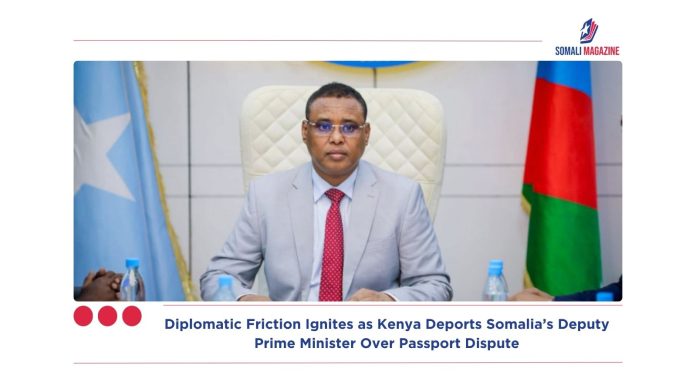
Kenya deports Somalia’s Deputy Prime Minister following an intense immigration standoff at the main international airport, igniting sudden geopolitical ripples across the Horn of Africa. The high-profile incident occurred late Thursday when Kenyan border control authorities officially denied entry to the senior Somali statesman, initiating a swift process of involuntary repatriation back to Mogadishu. According to early security briefings, the drastic executive action was triggered after immigration officials flagged what they alleged to be a fraudulent passport presented during standard entry processing. The sudden and unceremonious removal of such a high-ranking foreign official has instantly placed immense strain on the fragile bilateral relationship between Nairobi and Mogadishu, catching regional political analysts completely by surprise. While Kenyan immigration authorities have maintained a strict, security-first stance regarding the strict verification of international travel credentials, the executive decision has drawn intense scrutiny from local and regional stakeholders who fear the long-term diplomatic fallout.
The developing administrative crisis arrives during a period of complex, interlocking regional issues where absolute judicial transparency concerns are frequently raised by independent human rights organizations monitoring political overreach. While neither the Kenyan Ministry of Foreign Affairs nor the Federal Government of Somalia has published a comprehensive, definitive statement addressing the underlying passport mechanics, local reports indicate that senior diplomats are working feverishly behind closed doors to prevent a total breakdown of bilateral communications. In similar regional legal disputes, specialized regional prosecution teams are typically deployed to verify the authentic nature of state documents, yet the rapid acceleration of this specific deportation bypassed extended judicial evaluation. This abrupt intervention has fueled widespread public debate, with opposition figures in both nations questioning whether the swift enforcement action was purely a bureaucratic immigration enforcement measure or a calculated, politically motivated maneuver designed to signal diplomatic displeasure over wider bilateral policy disputes.
The resulting political standoff threatens to disrupt essential cross-border collaborations, particularly in shared counterterrorism initiatives and complex commercial trade agreements that keep the East African community interconnected. Freedom of expression regarding the incident remains highly active across digital networks, with regional commentators noting that such severe administrative measures between neighboring heads of state are exceptionally rare and highly volatile. As international observers continue to gather context-rich details on whether the flagged travel documentation was a technical administrative error or an intentional oversight, the immediate focus remains on how the executive leadership in Mogadishu intends to formally respond. With high-level state delegations currently reviewing the parameters of international travel protocols, the diplomatic standoff stands as a highly critical trial for regional stability, highlighting just how rapidly border enforcement mechanics can spill over into a profound international crisis.