
Facebook

Twitter (X)

Instagram

Somali Magazine - People's Magazine
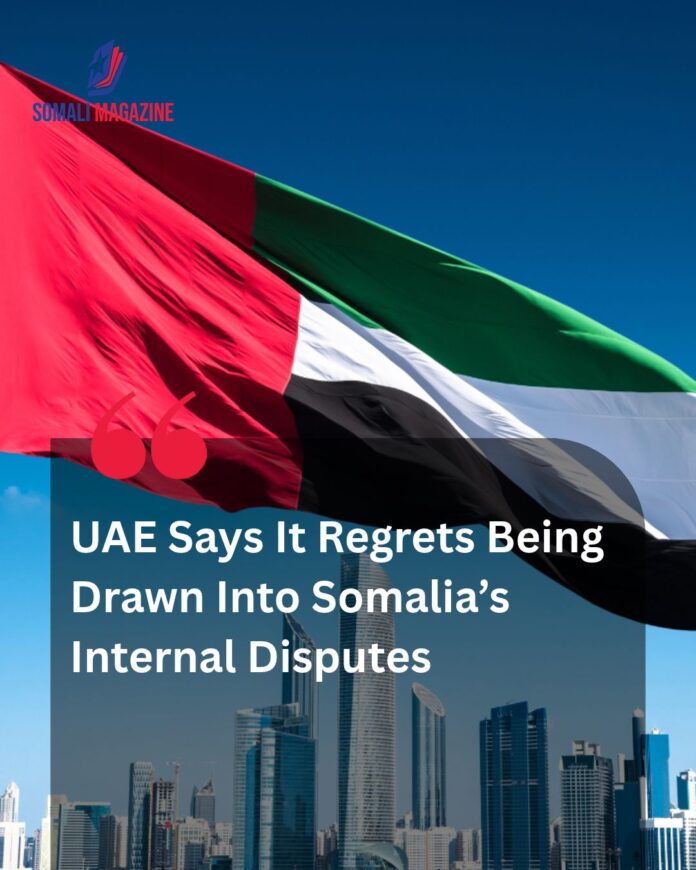
Amid a sharp escalation in diplomatic tensions between Abu Dhabi and Mogadishu, the UAE says it regrets being drawn into Somalia’s internal disputes, condemning what it characterized as an unjustified and hostile approach by the Somali government. In an official statement issued by the United Arab Emirates Ministry of Foreign Affairs on Thursday, November 19, 2026, Emirati officials argued that Mogadishu’s recent actions and statements are damaging bilateral ties and undermining the foundations of cooperation between the two nations. According to the ministry, decisions governing relations between sovereign states should rest on shared interests rather than domestic political calculations or internal power struggles. The statement warned that dragging bilateral ties into Somalia’s internal political conflicts risks adversely affecting the long-term interests of both peoples.
Abu Dhabi’s diplomatic response followed hours after Somalia’s Council of Ministers ordered UAE Ambassador Ahmed Al-Romaithi to leave the country within 72 hours and recalled Somalia’s envoy to the Emirates, Hussein Abdi Halane, for consultations. Earlier in the week, President of Somalia Hassan Sheikh Mohamud accused the United Arab Emirates of violating Somali sovereignty by establishing unauthorized military bases, backing armed factions outside national command, and pursuing unilateral port agreements without federal consent. In its communiqué, the Emirati foreign ministry noted that Abu Dhabi had already closed its embassy in Mogadishu and withdrawn diplomatic staff in January 2026 after Somalia annulled bilateral agreements, citing what the UAE described as hostile practices toward its diplomatic mission.
While firmly rejecting Mogadishu’s accusations, the United Arab Emirates emphasized its appreciation for the Somali people and expressed pride in the historical and social bonds linking citizens of both nations, particularly the Somali community residing in and visiting the UAE. Diplomatic adviser to the UAE president Dr. Anwar Gargash echoed that message earlier in the week, stating that Abu Dhabi’s relationship with the Somali public remains deeper than passing political disagreements. Meanwhile, Gulf Cooperation Council Secretary-General Jasem Mohamed Albudaiwi also issued a statement from Riyadh condemning alleged Somali government remarks and media campaigns targeting the Emirates, signaling unified regional backing for Abu Dhabi.
As the UAE says it regrets being drawn into Somalia’s internal disputes, political observers note that the diplomatic standoff unfolds alongside pressing domestic challenges inside Somalia, including deadlocked negotiations over constitutional amendments and upcoming electoral timelines. While Mogadishu maintains that its measures are strictly aimed at defending national sovereignty and territorial integrity, Abu Dhabi insists that its policies have long supported Somalia’s stability. Whether regional intermediaries will step in to de-escalate the crisis or restore formal diplomatic channels remains unconfirmed.