
Facebook

Twitter (X)

Instagram

Somali Magazine - People's Magazine
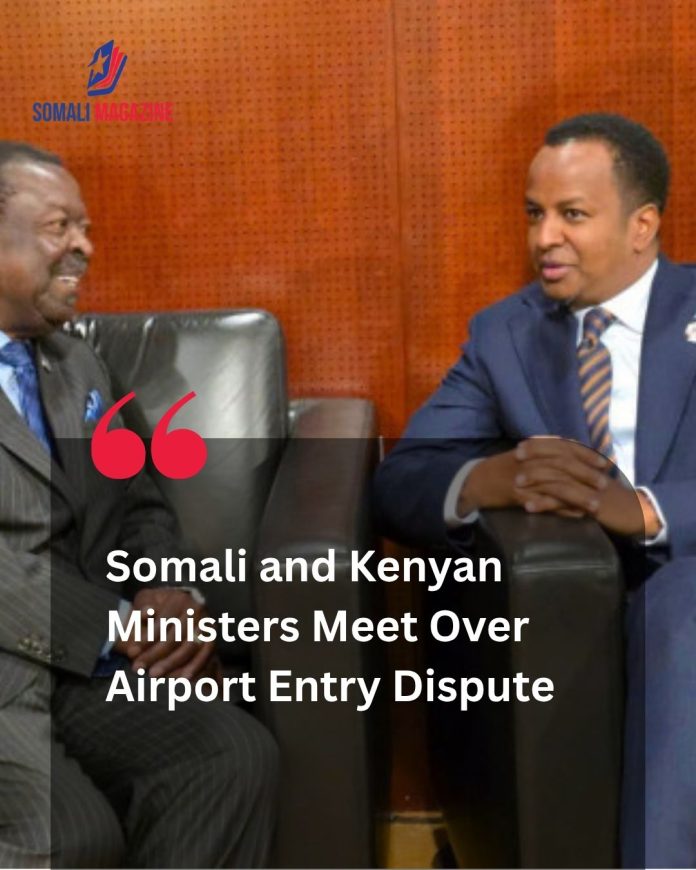
Diplomatic engagement between Mogadishu and Nairobi has reached a crucial juncture as Somali, Kenyan foreign ministers meet after entry denial of two Somali ministers at Jomo Kenyatta International Airport. High-level bilateral discussions were convened to address growing administrative friction following successive immigration actions taken by border control authorities in Nairobi against senior figures from Mogadishu’s executive leadership. According to government sources and regional reporting, state officials from the Ministry of Foreign Affairs in Mogadishu initiated formal consultations to review travel clearance procedures and clarify transit protocols for visiting foreign dignitaries. The talks follow back-to-back airport refusals involving State Minister at the Presidency Abshir Bukhaari and Second Deputy Prime Minister Jibril Abdirashid Haji, both of whom were turned back upon arrival in the Kenyan capital under circumstances involving passport verification and travel documentation compliance.
The high-level diplomatic meeting highlights the sensitive nature of cross-border transit between the neighboring Horn of Africa nations. Reports indicate that Kenyan immigration authorities questioned travel documents carried by the visiting officials, leading to immediate deportation procedures back to Mogadishu. While neither government has released an exhaustive joint statement detailing the precise legal or administrative grounds for the entry refusals, preliminary reports suggest that questions surrounding dual-passport usage and official clearance protocols triggered the enforcement actions. The recurrence of such high-profile entry denials within a short span prompted immediate calls for structured dialogue from Somali foreign ministry representatives to ensure sovereign dignity and prevent further administrative disruptions at major international entry ports.
During the consultations, foreign policy representatives from both capitals focused on establishing clearer diplomatic travel guidelines to avoid future airport standoffs. Observers note that while Kenya continues to tighten national immigration oversight to bolster regional security, applying strict clearance procedures to high-ranking state officials creates delicate political challenges for bilateral relations. Institutional experts emphasize that both countries maintain significant economic, security, and counterterrorism ties that require steady communication and mutual trust. Joint commitments to regional stability, trade flow, and shared border security remain central pillars of the broader diplomatic relationship between Mogadishu and Nairobi.
As discussions continue, civil society advocates and international relations experts stress the necessity of formalizing standardized immigration clearance mechanisms for government delegations. Ensuring transparent, predictable transit protocols is seen as vital to preserving long-term bilateral cooperation across East Africa. With formal talks underway, both nations aim to resolve travel document discrepancies and maintain effective strategic partnership. Moving forward, the outcome of the meeting between state leaders will be instrumental in reinforcing diplomatic norms and safeguarding state-to-state relations as Somali, Kenyan foreign ministers meet after entry denial of two Somali ministers to reaffirm mutual respect and institutional stability.