Facebook

Twitter (X)

Instagram

Somali Magazine - People's Magazine
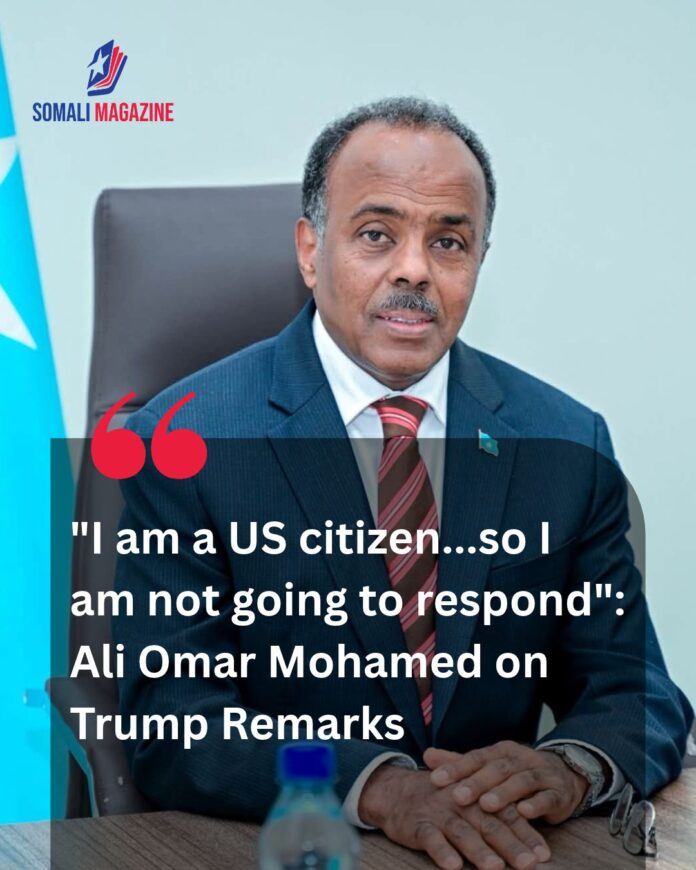
Against the backdrop of heated international discussions surrounding diplomatic rhetoric and diaspora representation, Ali Omar Mohamed declines to comment on US President Trump’s remarks, highlighting his status as a United States citizen. Addressing recent public commentary concerning Somalia, the State Minister for Foreign Affairs and International Cooperation framed his position by stating, “First of all, I am a US citizen…so I am not going to respond to what President Trump said (about Somalia).” The senior diplomat’s remarks underscore the unique intersection of domestic governance, foreign policy, and the prominent role that dual nationals from the diaspora play within high-level government administration in Mogadishu. Over successive administrations, numerous officials holding Western citizenships have returned to Somalia to contribute to institutional rebuilding, security reform, and diplomatic outreach. However, the blending of overseas legal ties with high-ranking public service frequently invites intense public scrutiny, particularly when foreign leaders issue critical statements regarding domestic conditions or security challenges in the Horn of Africa.
While federal officials have generally sought to maintain pragmatic, cooperative relations with international partners like Washington—which recently approved continued security support and military assistance for Somali forces—individual reactions to foreign political rhetoric vary widely. Observers note that while dual nationals provide crucial technical and linguistic expertise to government ministries, managing public perception regarding national sovereignty and external commentary remains a delicate diplomatic balancing act. The state minister’s measured response reflects the careful navigation required by officials operating at the nexus of international diaspora ties and local state-building priorities.
As Ali Omar Mohamed declines to comment on US President Trump’s remarks, political analysts emphasize that Somalia’s broader foreign policy objectives will continue to prioritize strategic alliances and security cooperation over rhetorical controversies. Federal ministries in Mogadishu remain focused on stabilizing regional corridors, managing upcoming electoral frameworks, and securing predictable international backing as peacekeeping mandates undergo major structural transitions. Moving forward, maintaining steady diplomatic channels with key global partners while upholding domestic political unity will remain essential for navigating complex international relations.