
Facebook

Twitter (X)

Instagram

Somali Magazine - People's Magazine
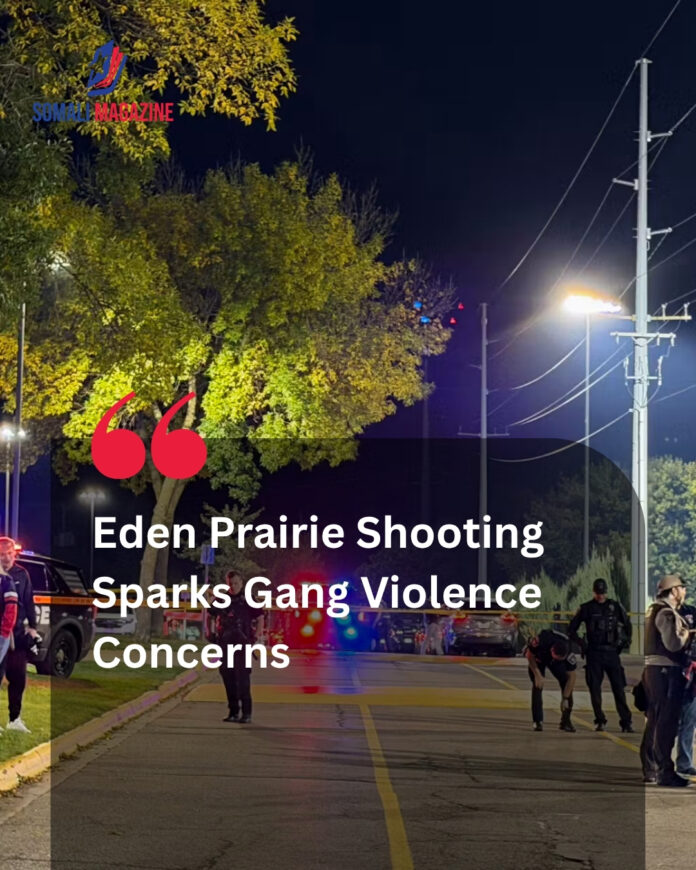
Eden Prairie shooting renews concern over Twin Cities Somali gang violence, sparking urgent discussions among law enforcement officials, local leaders, and residents across Minnesota. The violent incident, which occurred outside a high school homecoming football game, left two teenagers injured and triggered the immediate evacuation of the stadium. Police reports confirmed that the victims involved in the parking lot shooting were young men of Somali descent, drawing intense public scrutiny to an apparent uptick in localized youth conflicts across several Minneapolis suburbs.
In response to the growing security challenge, local police chiefs and county sheriffs have stepped forward to address a broader pattern of weapon-related incidents spanning communities like Bloomington, Edina, and Eden Prairie. Law enforcement authorities indicate that recent violent encounters are increasingly tied to factional youth groups, prompting calls for a coordinated regional task force to tackle the root causes of the disturbances. Officials emphasize that while the active disputes largely involve localized peer groups, the escalation of gunfire in public spaces presents an unacceptable danger to innocent bystanders and families throughout the metropolitan area.
The developments have simultaneously ignited important conversations regarding community relations and public rhetoric. Prominent Somali community organizers and religious leaders have strongly urged policymakers and law enforcement to focus on targeted, constructive solutions rather than broad generalizations that risk stigmatizing an entire population. Representatives note that the vast majority of families and youth are law-abiding citizens who feel deeply unsettled by the recent violence and anxious about the safety of their children. Advocates stress that fostering trust between marginalized neighborhoods and municipal authorities remains essential to addressing systemic challenges effectively.
Elected officials and community stakeholders are currently engaging in cooperative dialogues to bridge gaps and implement robust prevention programs. These initiatives aim to provide at-risk youth with alternative pathways, mentorship, and mental health support, diverting them away from destructive street peer pressure. As investigators continue their work on the active cases, the collective objective centers on restoring peace, reinforcing school security, and ensuring that Minnesota remains a safe environment for all residents regardless of background.