
Facebook

Twitter (X)

Instagram

Somali Magazine - People's Magazine
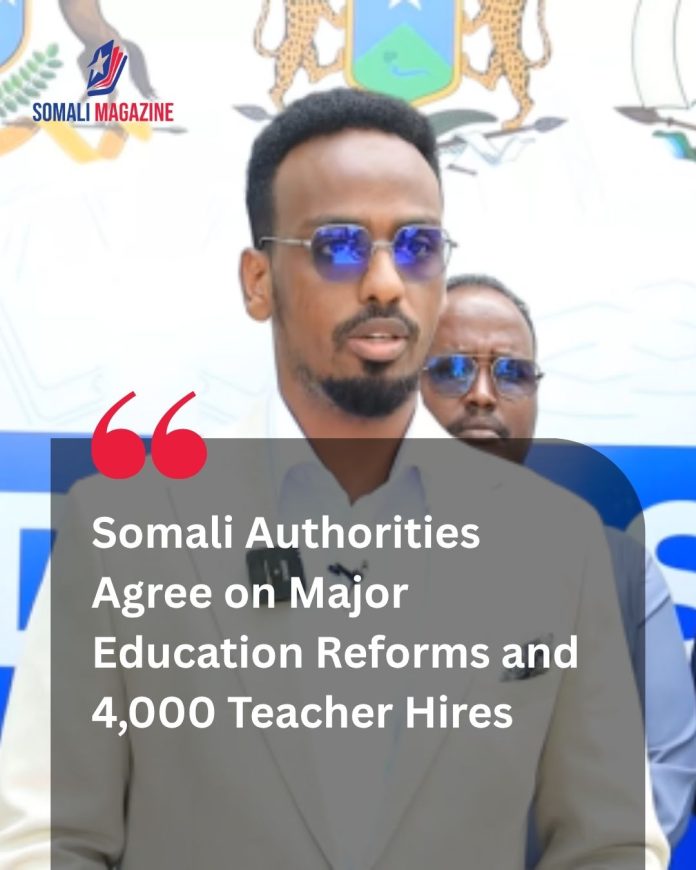
Following a landmark three-day consultative conference in Mogadishu, the Somali government plans to recruit 4,000 teachers as education authorities agree on key reforms aimed at elevating school management, safety, and instruction quality nationwide. The high-level gathering brought together leadership from the Federal Ministry of Education, state-level education ministries, and the Banadir Regional Administration to evaluate ongoing institutional performance and map out critical operational benchmarks for the upcoming 2026–2027 academic year.
The newly endorsed consensus establishes a structured roadmap to expand the public school recruitment drive, bringing the federal government significantly closer to fulfilling its broader target of adding thousands of certified educators to the civil service payroll. Authorities emphasized that new teaching candidates will undergo a competitive selection procedure alongside specialized instructional training aligned with national education standards. Beyond expanding classroom staff, officials agreed on operational measures to upgrade physical school environments, enhance sanitation infrastructure, and scale up federally funded school feeding initiatives to boost student enrollment and retention across vulnerable communities.
Administrative reforms also prioritize institutional oversight and cultural cohesion across all learning centers. Education leaders mandated the active display of national symbols across campuses, introduced policy enforcement restricting personal smartphone usage during active classroom hours, and established a national framework to formalize the census and official registration of Quranic schools and religious learning institutions. Regional administrations have been urged to mirror financial and structural support models pioneered in Banadir to ensure equitable resource distribution between urban centers and rural districts.
This comprehensive policy agreement signals a deliberate shift toward long-term educational stabilization and domestic institutional capacity. By synchronizing curriculum standards, expanding professional teacher deployments, and strengthening local school infrastructure, federal and regional authorities aim to build a resilient, standardized public education framework capable of serving Somalia’s expanding student population.