
Facebook

Twitter (X)

Instagram

Somali Magazine - People's Magazine
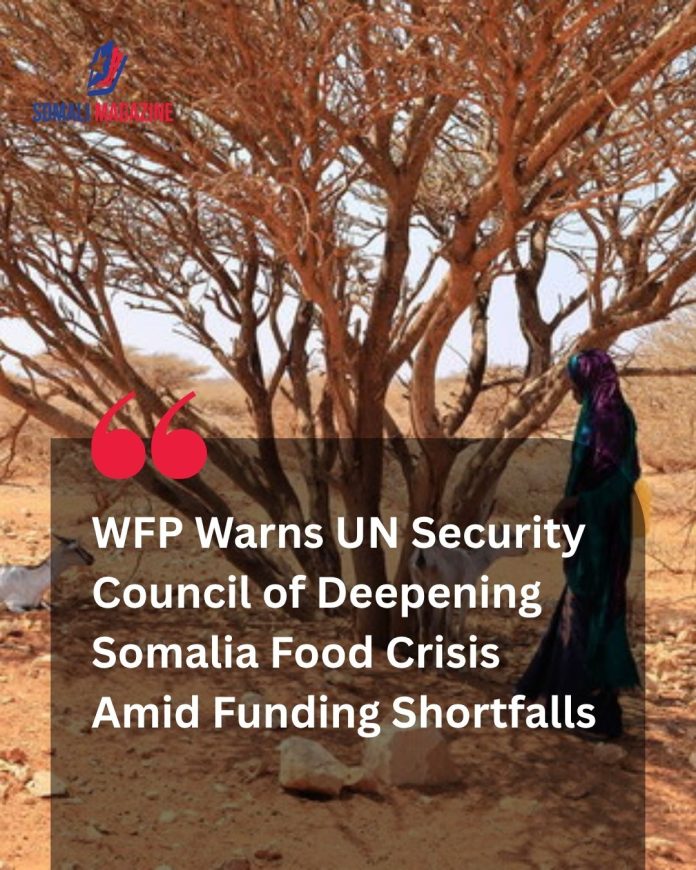
Humanitarian conditions across the Horn of Africa have reached an alarmingly critical juncture after the World Food Programme warns United Nations Security Council that Somalia faces another severe hunger emergency while operating with only a fraction of necessary global resources. Briefing the council following field inspections in vulnerable regions like Burhakaba district, acting WFP Executive Director Carl Skau reported that approximately six million people—representing nearly one-third of the country’s total population—are currently experiencing acute food insecurity. International aid officials cautioned that without an immediate influx of emergency funding, millions of vulnerable Somalis remain exposed to life-threatening nutrition deficits.
The deepening emergency stems from a compounding convergence of climate shocks, armed conflict, and severe global supply chain disruptions that have drastically escalated basic commodity prices. High shipping costs alongside regional maritime insecurity have pushed local food prices up by as much as seventy percent in certain rural zones, while fuel spikes have made transporting vital supplies increasingly difficult. WFP operational data indicates that nearly two million children under the age of five are projected to suffer from acute malnutrition this year, with almost five hundred thousand requiring immediate therapeutic intervention for severe wasting.
Humanitarian operations face unprecedented operational constraints due to drastic reductions in international donor contributions. Relief agencies currently maintain only one-tenth of the financial resources available during the 2022 drought response, forcing the WFP to support roughly six hundred thousand people—leaving roughly nine out of ten in urgent need without direct assistance. Officials at the Somali Disaster Management Agency noted that numerous nutrition and health facilities in displaced persons camps surrounding urban centers have been forced to close or severely scale back preventive services due to resource exhaustion.
International stakeholders and aid directors emphasize that early intervention remains essential to prevent widespread mortality and avoid repeating past humanitarian disasters. United Nations leaders have called on global partners to establish diplomatic circuit breakers that safeguard commercial shipping lanes, protect agrarian livelihoods, and mobilize urgent funding streams. As humanitarian warnings intensify, public health experts warn that waiting for formal declarations of famine represents a catastrophic delay, urging international donors to deliver immediate assistance to stabilize fragile communities across Somalia.